AI Network Operations Trends That Matter in 2026

Table of Contents
- What AI network operations trends actually change
- Trend 1: Operations tools are moving from alerts to context
- Trend 2: Anomaly detection is becoming more specific
- Trend 3: AI is improving root-cause analysis, not replacing it
- Trend 4: Automation is becoming more selective
- Trend 5: Security and network operations are sharing more data
- The prerequisite most teams underestimate: clean network data
- How to evaluate AI network operations tools without buying another dashboard
- Build AI readiness into your next refresh
- FAQs
A switch starts dropping connections on the warehouse floor at 2:15 p.m. Your help desk has three tickets, monitoring has 40 alerts, and a line-of-business manager wants an answer now. That is where AI network operations trends matter most - not as a flashy dashboard feature, but as a way to separate the signal from the noise before a small problem becomes downtime.
For IT teams supporting 100 to 250 employees, the promise is practical: fewer manual checks, faster fault isolation, and better decisions about where limited budget belongs. The catch is that AI will only be useful when it has trustworthy network data, sensible guardrails, and people who understand the business impact of a recommendation.
What AI network operations trends actually change
Network operations has long depended on experienced administrators interpreting logs, performance graphs, support tickets, and user reports. That work remains valuable, but the amount of telemetry generated by cloud-managed access points, switches, firewalls, WAN links, and endpoints is beyond what a small team can review consistently.
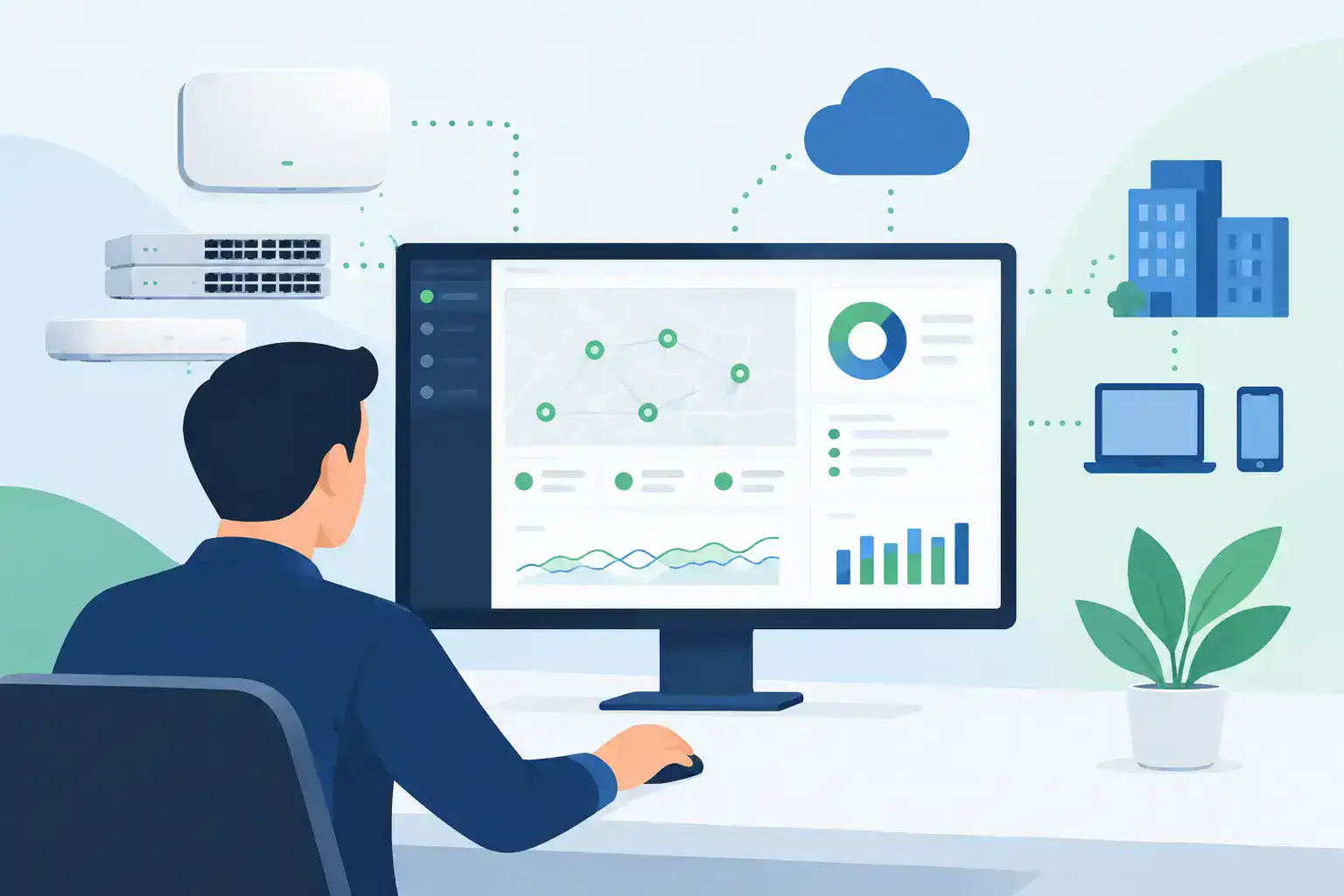
AI can correlate events across that data. Instead of showing 25 separate alerts for a failing uplink, it can identify a likely root cause, identify the users and applications affected, and suggest the next check. It can also establish a baseline for normal behavior, making it easier to notice when a retail location's wireless traffic, a manufacturing device segment, or an internet circuit begins acting differently.
That does not mean every network needs autonomous remediation. For many SMBs, the immediate value is better triage and clearer priorities. A tool that helps an administrator find the right problem in five minutes is often more useful than one that makes an unreviewed configuration change at 2 a.m.
Trend 1: Operations tools are moving from alerts to context
Traditional monitoring tools are good at telling you that a threshold was crossed. AI-assisted operations platforms aim to answer the questions that follow: Is this unusual? What changed? Is the issue likely local, site-wide, provider-related, or application-related? Which users are feeling it?
Context is the key difference. An access point reporting high utilization is not automatically a problem. It may be normal during a shift change, a customer event, or a scheduled software deployment. When the platform compares current activity against historical patterns, client experience, and adjacent devices, it can distinguish expected demand from an emerging capacity issue.
For IT leaders, this changes the conversation from "we saw an alert" to "this branch's wireless experience degraded after a configuration change, affecting voice traffic and 18 active clients." That is a more useful starting point for troubleshooting and communicating with leadership.
Trend 2: Anomaly detection is becoming more specific
The early version of AI operations often produced another layer of alerts. The better direction is anomaly detection tied to meaningful service behavior: recurring packet loss, abnormal authentication failures, a sudden jump in DNS requests, or a device behaving unlike its peers.
The goal is not to treat every anomaly as a security incident or an outage. Networks change constantly. A new software rollout can look suspicious; so can a legitimate seasonal traffic spike. AI should rank possibilities and show the evidence, while an administrator validates the operational context.
This is especially useful for small teams that cannot watch every site all day. A reliable baseline can surface gradual problems that threshold-based monitoring misses, such as a WAN circuit that is slowly degrading or an aging switch port generating intermittent errors.
Trend 3: AI is improving root-cause analysis, not replacing it
Root-cause analysis is one of the strongest use cases because network issues rarely stay inside one product category. A user may report that an application is slow, while the actual cause sits in wireless roaming, DHCP delays, an ISP issue, a security policy, or the application itself.
AI can compare timelines across these systems and reduce the number of plausible causes. That saves time, particularly when a network admin is handling tickets, projects, vendor coordination, and daily operations at once. But correlation is not proof. A good workflow lets the engineer review supporting telemetry before acting.
Be cautious of tools that present a recommendation with no path to verify it. Your team should be able to see what data informed the finding, what changed before the incident, and how confident the system is. Explainability matters when the suggested action could affect production traffic.
Trend 4: Automation is becoming more selective
The most practical automation is usually repetitive, low-risk work. That can include opening an incident with relevant diagnostic data, checking device reachability, collecting logs, notifying the right owner, or flagging a configuration drift from an approved standard.
Higher-impact actions need stronger controls. Automatically restarting infrastructure, changing firewall rules, or pushing switch configurations can solve a problem quickly, but an incorrect action can widen an outage. The appropriate level of automation depends on the network's maturity, change-control process, and the cost of being wrong.
A sensible approach is to phase automation in four steps:
- Start with visibility and recommendations.
- Automate data collection and ticket enrichment.
- Require approval for configuration changes.
- Expand auto-remediation only after testing repeatable scenarios.
This sequence gives the team time to validate whether the tool's recommendations match real-world conditions. It also creates an audit trail, which is useful for regulated organizations and for MSPs supporting multiple clients.
Trend 5: Security and network operations are sharing more data
Network availability and security are no longer separate operational conversations. Unusual east-west traffic, repeated failed authentications, rogue devices, or sudden changes in DNS behavior can point to security risk as well as performance trouble.
AI can help connect those signals, but it should not blur responsibility. Security teams need clear evidence and escalation paths. Network teams need to know whether a recommended containment action will interrupt a critical service. Shared visibility is valuable when it leads to faster, coordinated decisions, not when it creates a new flood of unclear alerts.
Segmentation also becomes more important as AI-driven analysis identifies device behavior. If a manufacturing controller, point-of-sale terminal, guest device, and corporate laptop all share broad access, there is little room to contain risk. The network design still does the foundational work that analytics alone cannot do.
The prerequisite most teams underestimate: clean network data
AI operations cannot compensate for an undocumented, inconsistent environment. If device names are vague, sites are not labeled consistently, configurations vary without an approved reason, and monitoring coverage has gaps, the outputs will be less trustworthy.
Before evaluating an AI operations platform, inventory the basics. Confirm what equipment is deployed, which software versions are in use, how sites and VLANs are named, where critical applications live, and which alerts truly indicate user impact. Review who can make changes and whether configuration backups are current.
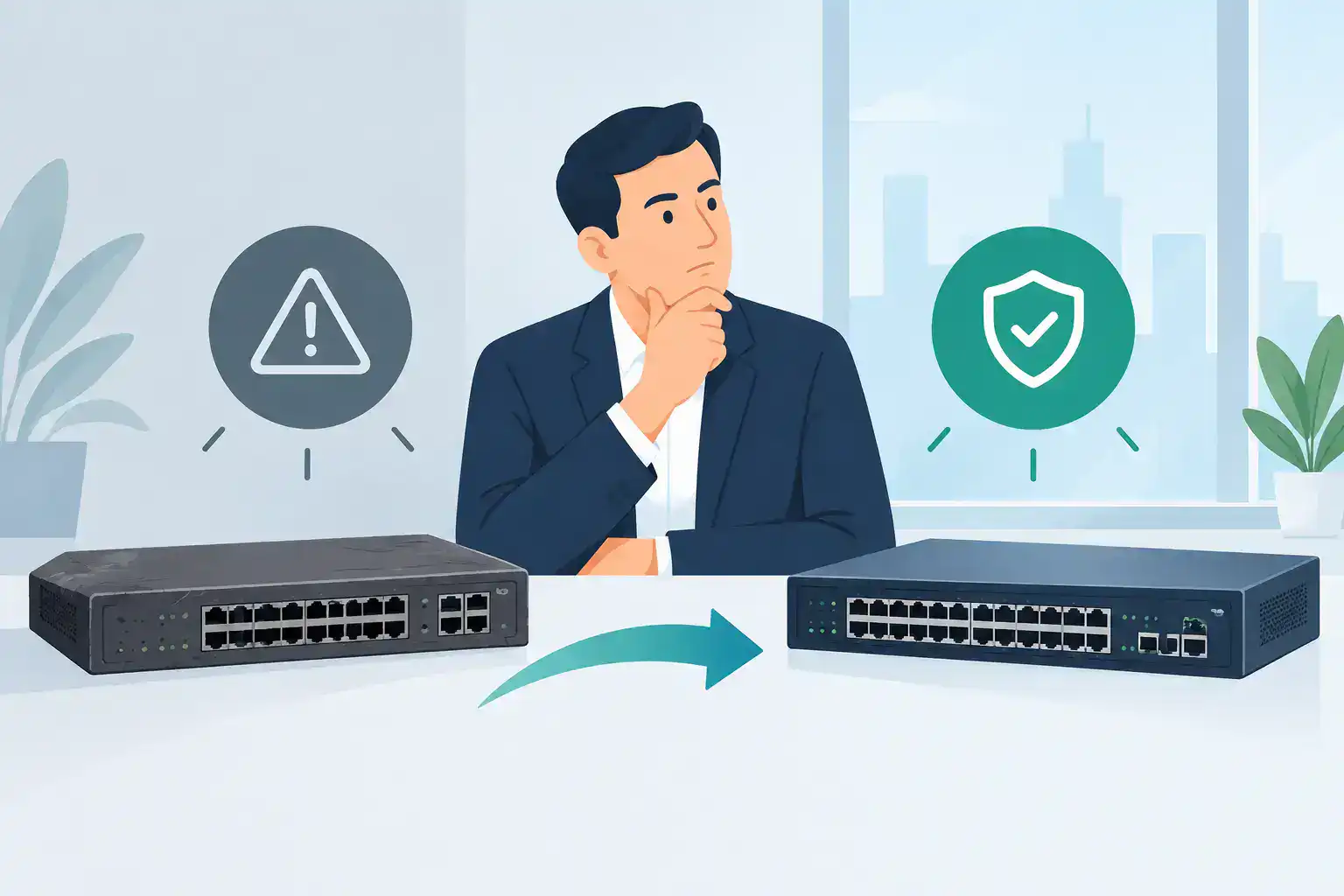
This work is not glamorous, but it improves every downstream outcome. It also often exposes refresh needs that have been hidden by temporary fixes. A switch approaching end of support, an undersized wireless design, or a mix of unmanaged equipment may create operational noise that no AI feature can responsibly solve.
How to evaluate AI network operations tools without buying another dashboard
Start with a specific operational problem. Maybe your team spends too long diagnosing wireless complaints. Maybe multi-site visibility is weak, or recurring ISP issues are difficult to prove. A focused use case makes it easier to evaluate whether a platform saves real time.
Ask vendors and partners to demonstrate the workflow with realistic conditions: an intermittent WAN problem, a client roaming issue, a failed authentication, or a configuration change that caused degradation. Look beyond the polished summary screen. Can your team inspect the evidence? Can it export useful incident details? Does it work across the equipment and management platforms you already use?
Also calculate the operating cost, not just the subscription cost. Some tools need significant tuning, separate data collectors, or staff time to maintain integrations. Others work best when the network is standardized on a supported ecosystem. There is no universal answer. The right choice depends on your architecture, internal skills, compliance requirements, and tolerance for operational change.
Build AI readiness into your next refresh
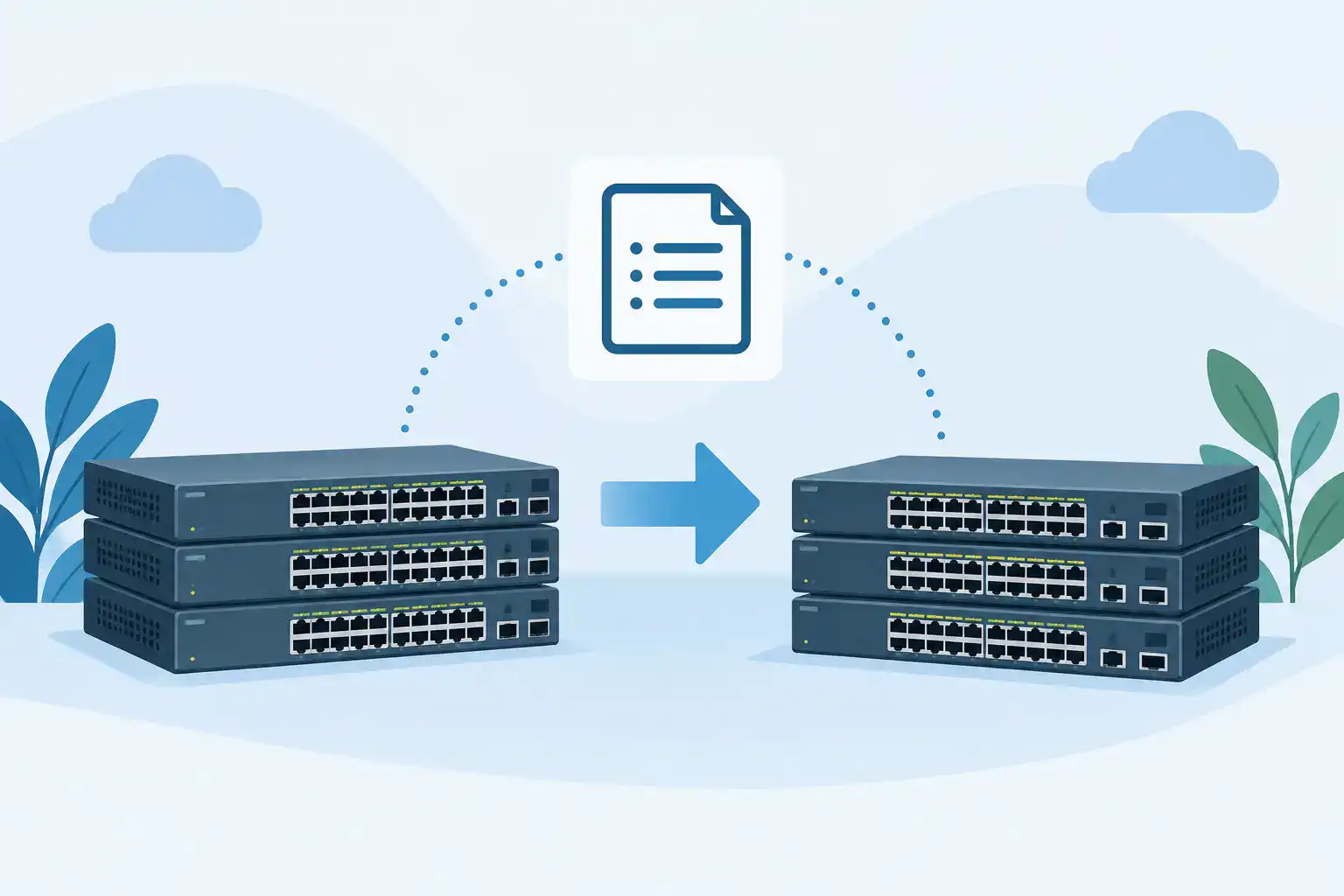
A network refresh is a good time to improve the data and visibility that AI operations depends on. Standardized hardware, current licensing, consistent configurations, reliable telemetry, and documented segmentation make troubleshooting easier before advanced analytics enter the picture.
That is also where configuration validation matters. Ordering the wrong power, optics, licenses, or compatible accessories can delay a project and leave your team improvising under pressure. Hummingbird Networks helps IT teams validate Cisco and Meraki configurations before purchase, so a refresh supports both immediate reliability and the operational tools you plan to use next.
The best next step is not to chase every new AI feature. Pick one recurring operational frustration, measure the time it costs your team, and improve the visibility around it. When the recommendation is clear, the data is credible, and the action is safe, AI earns a place in network operations.
FAQs
What are the latest AI network operations trends?
Key AI network operations trends include context-aware monitoring, anomaly detection, automated root-cause analysis, intelligent automation, and closer integration between network and security operations.
How is AI used in network operations?
AI helps IT teams analyze network telemetry, identify unusual behavior, correlate alerts, troubleshoot performance issues, and automate routine operational tasks.