
PDUs (Power Distribution Units)
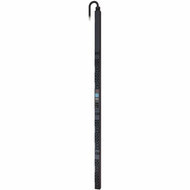

Distribute power throughout server racks, network closets, equipment cabinets, server rooms, edge environments, and data centers with Power Distribution Units from Hummingbird Networks. Rack PDUs provide multiple electrical outlets for servers, network switches, storage systems, security appliances, communications equipment, and other IT hardware while helping organizations manage available electrical capacity within the rack.
Hummingbird Networks offers basic, metered, monitored, managed, and switched PDU solutions for business and enterprise infrastructure. Available configurations include horizontal and vertical rack PDUs, 0U, 1U, and 2U designs, single-phase and three-phase power distribution, NEMA and IEC connections, and models designed for 120V, 208V, 230V, 240V, and other supported electrical environments.
PDUs are an important part of a complete power and cooling architecture. While an Uninterruptible Power Supply provides battery backup and power protection, a PDU distributes available electrical power to multiple devices. In many IT environments, a UPS and one or more rack PDUs work together to provide protected and organized power throughout the rack.
Power Distribution Units for IT Infrastructure
A Power Distribution Unit, commonly abbreviated PDU, distributes electrical power to multiple devices from a single upstream power source.
Rack PDUs are commonly used with:
- Servers
- Network switches
- Routers
- Firewalls
- Storage systems
- Security appliances
- Network video recorders
- Communications equipment
- Edge computing systems
- Other rack-mounted IT equipment
The appropriate PDU depends on voltage, phase, amperage, available electrical service, input plug, outlet types, outlet quantity, rack orientation, power capacity, monitoring requirements, remote management requirements, and the equipment being powered.
What Is a PDU?
A PDU is a device that distributes electrical power to multiple pieces of equipment.
In IT environments, PDUs are commonly installed inside equipment racks and cabinets where they provide power connections for servers, networking, storage, security, and other infrastructure.
A rack PDU can provide significantly more than additional outlets. Depending on the model, a PDU can also provide:
- Power metering
- Load monitoring
- Remote network management
- Outlet-level switching
- Remote equipment reboot
- Power sequencing
- Environmental monitoring integration
- Overload awareness
- Capacity-planning information
What Does a Rack PDU Do?
A rack PDU takes power from an electrical circuit, UPS, generator-backed source, or other compatible upstream power source and distributes it to multiple devices installed within a rack.
This allows organizations to centralize rack power connections instead of requiring a separate wall receptacle or circuit connection for every piece of equipment.
Depending on the PDU, administrators can also monitor how much power is being consumed and remotely control individual outlets.
Types of Power Distribution Units
Rack PDUs are available with different levels of power-management capability.
Common PDU categories include:
- Basic PDUs
- Metered PDUs
- Monitored PDUs
- Managed PDUs
- Switched PDUs
- Metered-by-outlet PDUs
- Switched and metered outlet PDUs
Terminology can vary between manufacturers, so buyers should compare the actual monitoring and switching capabilities of the specific PDU rather than relying only on the product-family name.
Basic PDUs
A basic PDU distributes electrical power to multiple outlets without advanced network management or remote outlet switching.
Basic PDUs can provide a practical solution when the primary requirement is reliable rack-level power distribution.
They are commonly used in:
- Network closets
- Server racks
- Telecommunications environments
- Security systems
- Audio/video installations
- Equipment cabinets
Current Hummingbird Networks inventory includes Eaton and Eaton Tripp Lite Series basic rack PDUs in multiple electrical and mounting configurations.
Basic PDU vs. Power Strip
A basic PDU and a power strip can both provide multiple electrical outlets, but rack PDUs are designed around IT infrastructure and rack deployment.
Depending on the model, a rack PDU can provide:
- Rack-specific mounting
- Higher outlet density
- Higher electrical capacity
- 208V or 240V support
- IEC outlets
- Three-phase power distribution
- Vertical 0U installation
- Equipment retention features
The correct choice depends on the equipment, electrical environment, rack design, and power requirements.
Metered PDUs
Metered PDUs provide power-consumption information that helps administrators understand how much electrical capacity is being used.
Depending on the model, metering can be displayed locally on the PDU or made available through network management.
Metering can help IT teams:
- Identify current power consumption
- Reduce overload risk
- Balance equipment loads
- Plan rack capacity
- Understand available electrical headroom
- Monitor power changes as equipment is added
Metered Input PDUs
A metered-input PDU measures power consumption at the PDU input, providing visibility into the total electrical load being drawn by connected equipment.
This can help administrators determine whether the PDU is approaching its supported electrical capacity.
Current Hummingbird Networks inventory includes Eaton metered-input rack PDUs in 0U configurations with single-phase and three-phase electrical options.
Why PDU Metering Matters
Without metering, administrators may know the theoretical maximum capacity of a circuit or PDU but have limited visibility into the actual load being consumed.
Metering can provide useful information when:
- Adding servers to a rack
- Adding storage systems
- Expanding network equipment
- Balancing redundant power paths
- Planning data center capacity
- Investigating overload conditions
Real-world power consumption can vary substantially depending on workload and equipment configuration.
Monitored PDUs
Monitored PDUs add remote visibility into electrical conditions through a network connection or management interface.
Depending on the system, remote monitoring can provide information such as:
- Current draw
- Power consumption
- Voltage
- Load level
- Power events
- Environmental conditions when compatible sensors are supported
Remote monitoring can be particularly valuable for branch offices, edge infrastructure, server rooms, and data centers where IT staff are not continuously present.
Managed PDUs
Managed PDUs combine rack power distribution with network-based administration and advanced power-management capabilities.
Depending on the model, a managed PDU can provide:
- Remote monitoring
- Outlet-level control
- Remote reboot capabilities
- Load monitoring
- Power alerts
- Power sequencing
- Network management
- Environmental monitoring integration
Managed PDUs are well suited to environments where administrators need greater visibility and control over rack power.
Switched PDUs
A switched PDU allows authorized administrators to remotely turn supported outlets on or off.
Depending on the model, individual outlet control can be used to:
- Remotely reboot unresponsive equipment
- Power equipment on or off
- Control startup sequences
- Control shutdown sequences
- Prevent unauthorized use of unused outlets
- Manage equipment at remote locations
Current Hummingbird Networks inventory includes switched Eaton and Eaton Tripp Lite Series PDUs designed for remotely managed rack environments.
Remote Reboot with a Switched PDU
One of the most useful capabilities of a switched PDU is remote power cycling.
If a router, server, security appliance, network device, or other connected system stops responding, an administrator may be able to turn its PDU outlet off and back on without physically visiting the equipment location.
This can be particularly valuable for:
- Remote offices
- Edge computing sites
- Unattended network closets
- Data center racks
- Distributed infrastructure
PDU Power Sequencing
Selected switched and managed PDUs can control the order and timing in which connected devices receive power.
Power sequencing can help:
- Reduce simultaneous startup loads
- Control equipment dependencies
- Bring network infrastructure online in a planned order
- Manage shutdown procedures
Capabilities vary by PDU, so outlet-level sequencing support should be verified for the specific model.
Network-Managed PDUs
Network-managed PDUs connect to an IP network so authorized administrators can monitor and manage power remotely.
Depending on the platform, network management can support technologies and protocols such as:
- Web-based administration
- HTTPS
- SNMP
- SSH
- Email alerts
- Network event notifications
Management capabilities vary between manufacturers and PDU families.
Outlet-Level PDU Monitoring
Advanced PDUs can provide monitoring at individual outlets rather than only at the complete PDU input.
Outlet-level monitoring can help administrators understand how much power specific devices consume.
This level of visibility can be useful for:
- Capacity planning
- Equipment power analysis
- Colocation environments
- Departmental chargeback
- High-density racks
- Troubleshooting unusual power consumption
Rackmount PDUs
Rackmount PDUs are designed to install directly within or alongside standard IT racks and cabinets.
Common rack PDU mounting configurations include:
- Vertical 0U
- Horizontal 1U
- Horizontal 2U
- Convertible mounting designs
The appropriate orientation depends on available rack space, outlet quantity, equipment density, cable routing, and rack design.
0U Vertical PDUs
A 0U PDU installs vertically within a compatible rack rather than consuming horizontal rack units.
Vertical PDUs are popular in server and data center racks because they can provide a large number of outlets while preserving rack units for IT equipment.
Advantages can include:
- High outlet density
- No conventional rack-unit consumption
- Convenient power connections along the rack height
- Reduced need for long equipment power cords
- Support for high-density racks
Current Hummingbird Networks inventory includes numerous Eaton 0U rack PDUs across basic, metered, and managed configurations.
1U Rack PDUs
A 1U PDU installs horizontally and consumes one rack unit.
Horizontal PDUs can be useful when:
- Vertical mounting space is unavailable
- A smaller number of outlets is required
- The rack design favors horizontal distribution
- Power needs to be positioned near particular equipment
Eaton Tripp Lite Series basic PDUs currently sold by Hummingbird Networks include 1U rackmount configurations with both NEMA and IEC outlet options.
2U Rack PDUs
Some higher-capability PDUs use a 2U horizontal form factor.
The additional space can accommodate greater outlet counts, electrical capacity, switching hardware, displays, or management electronics depending on the model.
Current Hummingbird Networks inventory includes managed and switched 2U PDU configurations.
Horizontal vs. Vertical PDU
The choice between horizontal and vertical rack power distribution depends primarily on rack design and outlet requirements.
Horizontal PDU
A horizontal PDU installs across the rack and usually consumes one or more rack units.
Vertical PDU
A vertical PDU installs along the side or rear of a compatible rack and can provide high outlet density without using conventional equipment rack units.
High-density server racks frequently benefit from vertical 0U distribution, while smaller network racks may use horizontal PDUs effectively.
Single-Phase PDUs
Single-phase power distribution is common in offices, network closets, server rooms, edge environments, and many enterprise racks.
Single-phase PDUs are available across multiple:
- Voltages
- Amperage ratings
- Input plugs
- Outlet configurations
- Mounting orientations
- Management levels
Current Hummingbird Networks inventory includes single-phase basic, metered, managed, and switched PDU options.
Three-Phase PDUs
Three-phase PDUs are used in higher-capacity power environments, including enterprise data centers and high-density server racks.
Three-phase distribution can deliver substantial power capacity efficiently to dense IT loads.
Current Hummingbird Networks inventory includes Eaton three-phase metered-input rack PDUs with configurations such as 120/208V and 200-240V operation.
Single-Phase vs. Three-Phase PDU
Single-phase and three-phase PDUs are designed for different electrical infrastructures.
Single-phase power is common in smaller IT environments and many conventional server racks.
Three-phase power is frequently used where greater electrical capacity and higher rack density are required.
The PDU must match the facility's available electrical service. Phase configuration cannot be selected independently from the upstream electrical infrastructure.
Split-Phase PDUs
Selected rack PDUs are designed for split-phase electrical environments.
Current Hummingbird Networks inventory includes Eaton 120/240V split-phase basic rack PDUs.
As with single- and three-phase equipment, the PDU input configuration must match the available electrical service.
120V PDUs
120V PDUs are common in North American network closets, branch offices, telecommunications installations, and lower-density server environments.
Typical 120V PDU configurations can use NEMA input and output connections such as:
- NEMA 5-15P
- NEMA 5-20P
- NEMA L5-20P
- NEMA L5-30P
- NEMA 5-15R
- NEMA 5-20R
The exact plug, receptacle, amperage, and circuit requirements should be verified before installation.
208V PDUs
208V power distribution is common in data centers and enterprise server environments.
208V PDUs can support higher-density equipment and are available with NEMA locking and IEC outlet configurations.
Current Hummingbird Networks inventory includes APC and Eaton PDU solutions designed for 208V rack power environments.
230V & 240V PDUs
230V and 240V PDUs are used in higher-voltage IT environments and international electrical installations.
Current Eaton Tripp Lite Series PDUs include configurations capable of distributing 208V, 230V, or 240V power to compatible equipment.
Always verify that the connected equipment supports the PDU output voltage.
High-Voltage Rack Power Distribution
Higher-voltage rack distribution can be useful for high-density servers and enterprise IT because it can support greater power delivery while reducing current for a given power level.
Planning should account for:
- Facility voltage
- Branch circuit
- PDU input rating
- Connected equipment voltage
- Plug and receptacle compatibility
- Power capacity
PDU Amperage
PDUs are available for different electrical current ratings.
Common PDU input configurations can include:
- 15A
- 20A
- 30A
- Higher-current enterprise configurations
Electrical current requirements must be matched to the branch circuit, input connector, PDU rating, and expected equipment load.
Understanding PDU kW Capacity
PDU capacity can be expressed in watts or kilowatts.
Current Hummingbird Networks inventory spans lower-capacity rack distribution through higher-density systems exceeding 5 kW and, in selected three-phase Eaton configurations, more than 8 kW maximum power capacity.
The usable capacity of a PDU depends on voltage, amperage, phase configuration, circuit design, and applicable electrical requirements.
Understanding PDU VA Ratings
Some PDUs are also specified in volt-amperes, or VA.
VA represents apparent power, while watts represent real power.
When designing rack power, administrators should understand the relevant voltage, current, VA, watt, and circuit limits of the complete electrical path.
NEMA PDUs
NEMA plugs and receptacles are widely used in North American electrical environments.
Rack PDUs can use both straight-blade and locking NEMA connections.
Common PDU input and output configurations include:
- NEMA 5-15
- NEMA 5-20
- NEMA L5-20
- NEMA L5-30
- NEMA L6-20
- NEMA L6-30
- NEMA L14-30
- NEMA L15-30
- NEMA L21-20
- NEMA L21-30
The appropriate connector depends on voltage, current, phase, and electrical service.
Locking NEMA PDU Plugs
Locking NEMA connectors twist into place to help reduce accidental disconnection.
They are common on higher-capacity rack PDUs and can include configurations such as L5-30P, L6-30P, L14-30P, L15-30P, and L21-30P depending on the electrical architecture.
Plug configuration must match the facility receptacle exactly.
IEC PDUs
IEC connections are widely used on servers, storage systems, networking equipment, and data center infrastructure.
Common IEC receptacles on rack PDUs include:
- IEC C13
- IEC C19
- Combination or hybrid IEC outlet designs on selected systems
IEC-based rack distribution is especially common in enterprise and higher-voltage environments.
C13 PDU Outlets
IEC C13 outlets are commonly used to power servers, network switches, storage appliances, security equipment, and other IT hardware.
High-density vertical PDUs can provide dozens of C13 outlets within a single rack.
C19 PDU Outlets
IEC C19 outlets support equipment that uses higher-capacity IEC power connections.
They are commonly found alongside C13 outlets on data center PDUs so a single PDU can support equipment with different power requirements.
C13 & C19 Combination PDUs
Many enterprise rack PDUs combine C13 and C19 receptacles.
This provides flexibility for connecting a mixture of standard and higher-power IT equipment within the same rack.
Current Hummingbird Networks inventory includes Eaton and APC PDUs with mixed IEC outlet configurations.
High-Density PDUs
High-density server racks can require dozens of power connections.
High-density PDUs provide large outlet counts while minimizing the amount of rack space consumed by power distribution.
Vertical 0U designs are particularly useful because outlets can be distributed along the full height of the rack.
Current Hummingbird Networks inventory includes PDUs with 30 or more outlets, including configurations combining C13, C19, NEMA, and other supported receptacle types.
PDU Outlet Retention
Accidental power-cord disconnection can cause equipment downtime even when the upstream electrical system remains operational.
Selected enterprise PDUs include outlet-grip or retention features designed to help keep compatible power cords securely connected.
This can be useful in racks where cables are moved during maintenance or where equipment density is high.
PDU Circuit Protection
Selected PDUs include circuit breakers or other overload-protection mechanisms designed for their electrical configuration.
Circuit protection helps prevent the PDU or connected electrical path from operating beyond supported limits.
Administrators should understand both the PDU's overall capacity and any individual branch or outlet-bank limits.
PDU Load Banks
Some higher-capacity PDUs divide outlets into separate load banks protected by individual circuit breakers.
Administrators should consider the load on each bank as well as the total PDU load.
Unevenly loading one bank can create an overload even when total PDU capacity has not been reached.
PDU Load Balancing
Load balancing distributes equipment power consumption appropriately across available circuits, PDU banks, phases, or redundant power paths.
Metered and monitored PDUs can make load balancing easier by providing visibility into actual consumption.
Load balancing is especially important in:
- High-density racks
- Three-phase systems
- Redundant power architectures
- Data centers
- Large server environments
Three-Phase PDU Load Balancing
Three-phase PDU environments require attention to how loads are distributed across available phases.
Proper load balancing can help organizations use electrical capacity more effectively and reduce phase imbalance.
Metering capabilities can provide useful visibility when managing three-phase rack loads.
PDUs for Server Racks
Server racks can contain many devices requiring separate electrical connections.
A rack PDU provides centralized power distribution for:
- Rack servers
- Blade or modular infrastructure
- Storage arrays
- Network switches
- Management appliances
- Security equipment
When selecting a PDU for servers, consider equipment voltage, power-supply connectors, redundancy, rack density, outlet count, and expected electrical load.
PDUs for Network Racks
Network racks commonly contain switches, routers, firewalls, wireless infrastructure, patching, communications equipment, and other devices.
A PDU can centralize power distribution while preserving an organized rack layout.
Network-rack PDU requirements can include:
- 120V operation
- NEMA outlets
- Horizontal or vertical mounting
- Remote monitoring
- Switched outlets
- Compact rack dimensions
PDUs for Network Switches
Enterprise network switches can use single or redundant power supplies and may require NEMA or IEC electrical connections depending on the platform.
A properly selected PDU can provide organized rack power for multiple switches while supporting the required voltage and connector types.
High-power PoE switches should be included carefully in PDU capacity calculations because their electrical consumption can increase as connected PoE load increases.
PDUs for Storage Systems
Enterprise storage arrays can consume substantial electrical power and often use redundant power supplies.
Rack power design should account for:
- Storage-system wattage
- Redundant power supplies
- Input voltage
- IEC or NEMA connections
- Multiple power paths
PDUs for Network Closets
Network closets can use rack PDUs to distribute power among switches, routers, firewalls, communications systems, and related equipment.
Smaller closets may use horizontal 1U PDUs, while larger racks can benefit from vertical 0U distribution.
Metered or managed models can provide additional visibility where network closets support large PoE loads or critical infrastructure.
PDUs for Server Rooms
Server rooms can contain multiple racks with different electrical loads and availability requirements.
PDU planning should consider:
- Rack power density
- Input voltage
- Available circuits
- Single-phase or three-phase service
- UPS capacity
- Redundant power paths
- Outlet quantity
- Monitoring requirements
- Future growth
Data Center PDUs
Data centers can require high-density rack PDUs with advanced monitoring and management capabilities.
Data center PDU features can include:
- High outlet density
- 0U vertical mounting
- 208V or higher-voltage distribution
- Three-phase input
- Input metering
- Outlet-level monitoring
- Remote switching
- Network management
- Environmental monitoring integration
PDUs for Edge Computing
Edge computing environments can place servers and network equipment in branch offices, retail locations, warehouses, healthcare facilities, manufacturing sites, and other remote environments.
Managed and switched PDUs can be particularly valuable at edge sites because administrators can monitor power and potentially reboot connected equipment remotely.
PDUs for Remote Sites
Remote infrastructure can be difficult or expensive to access when equipment stops responding.
A network-managed switched PDU can provide administrators with remote power visibility and outlet control without requiring an immediate site visit.
This capability can be useful for:
- Branch offices
- Remote network closets
- Telecommunications sites
- Security infrastructure
- Edge computing systems
PDU & UPS Integration
PDUs and UPS systems perform different but complementary functions.
The UPS provides battery backup and power protection.
The PDU distributes that power to multiple pieces of rack equipment.
A common rack power path can therefore be:
Electrical Source → UPS → PDU → IT Equipment
The UPS output and PDU input must be electrically compatible, and the combined connected equipment load must remain within the limits of both systems.
Can You Plug a PDU into a UPS?
Compatible rack PDUs are commonly connected downstream from UPS systems.
Before connecting a PDU to a UPS, verify:
- UPS output voltage
- UPS output receptacle
- PDU input plug
- UPS watt and VA capacity
- PDU amperage rating
- Total connected equipment load
The UPS and PDU should be designed as part of the same power-distribution architecture rather than selected independently.
PDU vs. UPS
A PDU does not perform the same function as a UPS.
PDU: Distributes electrical power to multiple devices.
UPS: Provides temporary battery backup and power protection.
A basic PDU normally does not provide battery backup.
PDU vs. Surge Protector
A PDU is primarily designed to distribute power.
A surge protector is designed to help protect connected electronics against certain transient voltage spikes.
Some products can combine multiple functions, but buyers should not assume that every rack PDU provides surge suppression.
Always verify the protection capabilities of the specific product.
PDU vs. Power Strip
Power strips and PDUs both distribute electricity, but rack PDUs are designed specifically for IT infrastructure and can support capabilities beyond conventional power strips.
Advanced PDUs can offer:
- High outlet density
- Rack-specific mounting
- Higher-voltage operation
- Three-phase power
- Metering
- Network monitoring
- Remote switching
- Outlet-level control
Redundant Rack Power
Servers, switches, storage systems, and other enterprise devices can include dual power supplies.
For improved power-path redundancy, each power supply can be connected to a separate compatible PDU and upstream power source.
A redundant architecture can include:
- PDU A and PDU B
- Separate UPS systems
- Separate branch circuits
- Separate utility or generator-backed paths
The appropriate architecture depends on availability requirements and facility design.
A/B Power Distribution
A/B rack power uses two separate electrical paths to reduce dependence on a single PDU or upstream power source.
Dual-cord servers and other redundant-power devices can connect one power supply to the A path and the second power supply to the B path.
This architecture can help maintain equipment power when one supported path is unavailable.
PDUs for Dual-Power-Supply Servers
Servers with redundant power supplies can benefit from separate rack power paths.
When designing redundant power, avoid connecting both server power supplies to the same PDU if the goal is to reduce dependence on a single PDU.
Each path should be evaluated according to the desired redundancy design.
PDU Power Monitoring
Power monitoring helps administrators understand how electrical capacity is being used within a rack.
Depending on the PDU, monitoring can include:
- Current
- Voltage
- Power
- Load percentage
- Energy consumption
- Power events
- Outlet-level measurements
Available measurements vary by PDU model.
PDU Environmental Monitoring
Selected managed PDUs can integrate with compatible environmental sensors.
Depending on the platform, administrators may be able to monitor conditions such as:
- Temperature
- Humidity
- Other supported environmental conditions
This can combine rack power and environmental visibility within a common management platform.
Sensor compatibility varies by PDU and manufacturer.
PDU Alerts & Notifications
Network-managed PDUs can provide alerts when monitored conditions cross configured thresholds.
Depending on the platform, alerts can help identify:
- High electrical load
- Potential overload conditions
- Power events
- Environmental conditions
- Communication problems
Proactive notification can help administrators respond before a condition causes equipment downtime.
APC Rack PDUs
APC offers rack power distribution for enterprise IT and data center environments through its NetShelter infrastructure portfolio.
Current Hummingbird Networks inventory includes APC NetShelter Rack PDU Advanced models with capabilities such as:
- Switched power distribution
- Metered outlets
- 0U vertical mounting
- 208V operation
- High outlet density
- IEC outlet configurations
APC NetShelter Rack PDU Advanced
APC NetShelter Rack PDU Advanced systems are designed for power distribution to IT equipment in server and network racks.
Selected current configurations combine switched operation with outlet metering and high-density IEC receptacles.
These systems are appropriate for environments requiring detailed power visibility and remote control.
Eaton Rack PDUs
Eaton offers a broad portfolio of rack power distribution for network closets, server rooms, edge infrastructure, and data centers.
Current Hummingbird Networks Eaton inventory includes:
- Basic rack PDUs
- Metered-input PDUs
- Managed PDUs
- Switched PDUs
- 0U vertical PDUs
- Horizontal rack PDUs
- Single-phase PDUs
- Split-phase PDUs
- Three-phase PDUs
- NEMA configurations
- IEC configurations
Eaton ePDU
Eaton ePDU systems provide rack-level power distribution across different capacity, monitoring, and management requirements.
Depending on the model, Eaton ePDU capabilities can include metering, network management, switched outlets, and high-density power distribution.
Exact capabilities should be compared at the model level.
Eaton Tripp Lite Series PDUs
Eaton Tripp Lite Series offers rack PDUs for networking, servers, telecommunications, security, audio/video, and other business infrastructure.
Available configurations can include:
- Basic PDUs
- Metered PDUs
- Switched PDUs
- 120V PDUs
- 208V and 240V PDUs
- NEMA outlets
- IEC C13 and C19 outlets
- Horizontal rack mounting
- Vertical 0U mounting
Eaton Tripp Lite Series Basic PDUs
Basic Eaton Tripp Lite Series PDUs provide straightforward AC power distribution for compatible IT equipment.
Current Hummingbird Networks products include models with 120V NEMA distribution as well as higher-voltage IEC configurations.
Selected models support multiple mounting orientations, including horizontal 1U and vertical 0U installation.
Eaton Tripp Lite Series Metered PDUs
Metered Eaton Tripp Lite Series PDUs add local electrical-load information to rack power distribution.
Current models can provide continuous current information to help administrators identify load levels and reduce overload risk.
Eaton Tripp Lite Series Switched PDUs
Switched Eaton Tripp Lite Series PDUs can combine remote network management with individual outlet control.
Selected current models allow administrators to:
- Turn outlets on or off remotely
- Power-cycle connected equipment
- Control startup sequences
- Lock unused outlets
- Monitor PDU load
- Receive network-based notifications
Ubiquiti Power Distribution
Hummingbird Networks also carries Ubiquiti power distribution equipment for compatible infrastructure environments.
Current catalog options include high-density network-connected power distribution designed to integrate power management with IT infrastructure.
Specifications and compatibility should be evaluated according to the exact Ubiquiti product and deployment.
How to Size a PDU
PDU sizing begins with the equipment that will receive power from the unit.
A basic process includes:
- Identify every connected device
- Determine expected equipment power consumption
- Determine input voltage
- Determine required phase configuration
- Determine available circuit amperage
- Verify input plug compatibility
- Count required outlets
- Identify outlet types
- Consider redundancy
- Allow appropriate capacity for growth
Electrical infrastructure should be designed according to equipment requirements, manufacturer specifications, and applicable electrical standards.
How Many PDU Outlets Do I Need?
Count the power connections required by every device in the rack.
Remember that equipment with redundant power supplies can require two power connections per device.
Additional outlet capacity can be useful for future expansion, but outlet count alone does not determine PDU capacity.
The electrical load must remain within supported limits even when unused outlets remain available.
How Much PDU Capacity Do I Need?
Add the expected electrical consumption of connected equipment and compare that load with the PDU and upstream circuit capacity.
Capacity planning should account for:
- Current equipment
- Peak load
- Future equipment
- Redundant power supplies
- PoE switch load
- Electrical derating requirements
For high-capacity deployments, work with qualified electrical professionals to ensure the branch circuit and rack distribution are designed appropriately.
How to Choose a PDU
Selecting a rack PDU requires matching both the electrical infrastructure and the equipment being powered.
Determine the Input Voltage
Identify whether the rack receives 120V, 208V, 230V, 240V, or another supported voltage.
Determine the Phase
Identify whether the electrical source is single-phase, split-phase, or three-phase.
Check the Input Plug
The PDU plug must match the available upstream receptacle or supported UPS output.
Determine the Required Capacity
Calculate expected equipment load and ensure the PDU and electrical circuit provide appropriate capacity.
Count the Required Outlets
Include all equipment power supplies and reasonable future growth.
Identify Outlet Types
Determine whether equipment uses NEMA, IEC C13/C14, IEC C19/C20, or other supported connections.
Choose Horizontal or Vertical Mounting
Consider rack space, outlet density, cable routing, and rack compatibility.
Choose the Management Level
Determine whether basic distribution, metering, remote monitoring, or outlet-level switching is required.
Consider Redundant Power
For dual-power-supply equipment, determine whether separate A and B power paths are required.
Plan for Growth
Allow reasonable electrical and outlet capacity for future equipment additions.
PDU Selection Checklist
Before purchasing a Power Distribution Unit, verify:
- Input voltage
- Output voltage
- Single-phase, split-phase, or three-phase power
- Input amperage
- Input plug type
- Outlet types
- Outlet quantity
- Maximum power capacity
- Horizontal or vertical mounting
- Rack-unit requirements
- Metering requirements
- Remote monitoring requirements
- Outlet switching requirements
- Redundant power architecture
- UPS compatibility if applicable
- Future expansion requirements
Building a Complete Rack Power Architecture
A complete rack power environment can combine several technologies.
Depending on availability and infrastructure requirements, a deployment can include:
- Utility or generator-backed electrical service
- UPS battery backup
- Rack PDUs
- Redundant A/B power paths
- Power monitoring
- Environmental monitoring
- Rack cooling
- Network management
Explore Racks & Infrastructure when planning the physical environment that supports rack-mounted power, servers, networking, storage, and cabling.
PDU Accessories
Rack power deployments can require accessories for mounting, cable management, environmental monitoring, equipment retention, connectivity, or other manufacturer-specific functions.
PDU accessories should be matched to the exact PDU family and installation requirements. Compatibility is particularly important for manufacturer-specific mounting and management components.
Hummingbird Networks offers a dedicated Power Distribution Unit Accessories category for compatible PDU infrastructure. Accessory selection should be based on the PDU manufacturer, model, rack environment, and required function.
Why Buy Power Distribution Units from Hummingbird Networks?
Rack power distribution requires careful matching of voltage, phase, amperage, input connections, outlet types, rack configuration, electrical capacity, monitoring, and management requirements.
Hummingbird Networks offers PDUs for network closets, server rooms, edge computing, enterprise racks, and data centers from leading power and infrastructure manufacturers.
Customers can turn to our team for:
- Basic rack PDUs
- Metered PDUs
- Managed PDUs
- Switched PDUs
- 0U vertical PDUs
- 1U and 2U rack PDUs
- Single-phase PDUs
- Three-phase PDUs
- 120V rack power distribution
- 208V and 240V rack power distribution
- NEMA PDUs
- IEC PDUs
- APC rack PDUs
- Eaton rack PDUs
- Eaton Tripp Lite Series PDUs
- Ubiquiti power distribution
- PDU compatibility and selection guidance
Whether you need basic rack power for a network closet, metered distribution for a server room, remote outlet control for an edge site, or high-density three-phase distribution for a data center, Hummingbird Networks can help identify PDUs based on your electrical environment and IT equipment requirements.
Frequently Asked Questions About Power Distribution Units
What does PDU stand for?
PDU stands for Power Distribution Unit.
What is a PDU?
A PDU distributes electrical power to multiple connected devices. Rack PDUs are designed specifically for servers, networking, storage, security equipment, and other IT infrastructure.
What is a rack PDU?
A rack PDU is a Power Distribution Unit designed to mount within or alongside an IT rack and provide electrical outlets for rack-mounted equipment.
Does a PDU provide battery backup?
A standard PDU does not provide battery backup. A UPS provides battery backup, while a PDU distributes available electrical power.
What is the difference between a PDU and UPS?
A UPS provides temporary battery power and power protection. A PDU distributes electrical power to multiple devices. The two are frequently used together.
Can I plug a PDU into a UPS?
Compatible rack PDUs are commonly connected to UPS outputs. The UPS output, PDU input, voltage, connectors, amperage, and total equipment load must all be compatible.
What is a basic PDU?
A basic PDU distributes electrical power without advanced remote monitoring or outlet switching.
What is a metered PDU?
A metered PDU measures electrical consumption so administrators can monitor load and available capacity.
What is a monitored PDU?
A monitored PDU provides remote visibility into electrical conditions through a network-management interface on supported models.
What is a managed PDU?
A managed PDU provides advanced network-based power monitoring and management capabilities. Features vary by manufacturer and model.
What is a switched PDU?
A switched PDU allows authorized administrators to remotely turn supported outlets on or off.
Can a switched PDU remotely reboot equipment?
Yes. On supported models, an individual outlet can be power-cycled to reboot connected equipment remotely.
What is a 0U PDU?
A 0U PDU installs vertically within a compatible rack and does not consume conventional horizontal rack units.
What is a 1U PDU?
A 1U PDU installs horizontally and occupies one rack unit.
Is a vertical PDU better than a horizontal PDU?
Neither orientation is universally better. Vertical PDUs can provide high outlet density without consuming rack units, while horizontal PDUs can be practical in smaller racks or where vertical mounting space is unavailable.
What is a three-phase PDU?
A three-phase PDU distributes power from a compatible three-phase electrical source and is commonly used in higher-capacity data center and enterprise environments.
Do I need single-phase or three-phase PDU power?
The PDU must match the electrical service available at the installation location. Single-phase is common in many network and server environments, while three-phase is frequently used for higher-density infrastructure.
What is a split-phase PDU?
A split-phase PDU is designed for a compatible split-phase electrical source, such as selected 120/240V environments.
What voltage PDU do I need?
The PDU input must match the facility or UPS output voltage, and the PDU output must be compatible with the connected equipment. Common IT environments include 120V, 208V, 230V, and 240V.
What are C13 and C19 PDU outlets?
C13 and C19 are IEC receptacle types widely used with servers, switches, storage systems, and other enterprise IT equipment. C19 connections are commonly used with equipment requiring higher-capacity power connections.
What is the difference between NEMA and IEC PDUs?
NEMA PDUs use North American NEMA plug or receptacle standards, while IEC PDUs use international IEC connection standards commonly found on enterprise IT equipment.
How many outlets should my PDU have?
Count all required equipment power connections, including redundant power supplies, and allow reasonable room for future growth. Outlet count must still be considered alongside electrical capacity.
Can I use every outlet on a PDU?
Having an unused outlet does not mean additional electrical capacity is available. The total load and any branch or outlet-bank limits must remain within the PDU's supported ratings.
How do I know if a PDU is overloaded?
Metered and monitored PDUs can provide load information and, on supported systems, threshold alerts. Basic PDU deployments require capacity to be calculated from connected equipment and electrical ratings.
What is PDU load balancing?
Load balancing distributes electrical demand appropriately across available circuits, PDU banks, phases, or redundant power paths.
Can a PDU monitor individual outlets?
Selected advanced PDUs provide outlet-level metering. Capabilities vary by model.
Can a PDU turn individual outlets on and off?
Selected switched and managed PDUs provide individual outlet control.
Can a PDU monitor temperature?
Selected managed PDUs support compatible environmental sensors for conditions such as temperature and humidity. Sensor capabilities vary by manufacturer and model.
What is A/B rack power?
A/B power uses separate rack power paths to reduce dependence on a single PDU or upstream power source. Equipment with redundant power supplies can connect one supply to each path.
Do servers need two PDUs?
Servers do not inherently require two PDUs, but dual-power-supply servers can use separate A and B PDUs when the infrastructure is designed for redundant power paths.
What PDU should I use for a server rack?
Choose according to rack voltage, phase, amperage, input plug, equipment outlet types, outlet quantity, expected load, redundancy, mounting requirements, and desired monitoring or switching capabilities.
What PDU should I use for a network rack?
Network racks can use basic, metered, or managed PDUs depending on the required electrical capacity and management features. Consider switch and PoE loads carefully when calculating capacity.
What PDU should I use for a data center?
Data center requirements vary, but high-density 0U PDUs, 208V or three-phase distribution, metering, network monitoring, outlet-level control, and redundant A/B power are common considerations.
Does APC make rack PDUs?
Yes. APC offers NetShelter rack PDU solutions for compatible server, networking, and data center environments.
Does Eaton make rack PDUs?
Yes. Eaton offers basic, metered, managed, switched, single-phase, split-phase, and three-phase rack power distribution solutions.
Does Eaton Tripp Lite Series make PDUs?
Yes. Eaton Tripp Lite Series offers basic, metered, switched, NEMA, IEC, horizontal, and vertical rack power distribution solutions.
Does Hummingbird Networks sell PDU accessories?
Yes. Hummingbird Networks has a dedicated Power Distribution Unit Accessories category for compatible PDU accessories. Accessory compatibility should be verified against the exact PDU and rack environment.
Can Hummingbird Networks help me choose a PDU?
Yes. Providing the available voltage, phase, amperage, input receptacle, rack configuration, connected equipment, outlet requirements, expected electrical load, and management requirements can help identify appropriate PDU options.
Shop PDUs & Power Distribution Units
Build reliable rack power infrastructure with Power Distribution Units for servers, network switches, storage, security appliances, communications equipment, edge computing, and enterprise IT.
From basic and metered rack PDUs to managed, switched, high-density, 0U, single-phase, and three-phase solutions from Eaton, APC, Eaton Tripp Lite Series, Ubiquiti, and other compatible infrastructure manufacturers, Hummingbird Networks can help organizations select power distribution based on electrical capacity, rack design, outlet requirements, monitoring, management, and redundancy.