New Meraki Sensors and Cameras

Table of Contents
- 1) Meraki MT Sensors: Real-Time Visibility Into Your Physical Environment
- 2) The Latest Meraki MV Cameras: AI-Driven Video & Analytics at the Edge
- 3) How Meraki Sensors and Cameras Work Together in the Meraki Ecosystem
- 4) Deployment & Licensing Considerations
- 5) Why This Matters for Growing SMBs
- Final Thoughts
- FAQs
Cisco Meraki sensors and cameras cloud-managed ecosystem keeps leveling up — not just in networking performance, but in environmental awareness, physical security, and operational intelligence. The platform already gives IT teams simple deployment, predictable updates, and visibility across switches, access points, firewalls, and mobile devices. The latest Meraki MT sensors and MV smart cameras extend this foundation even further, helping growing organizations protect sites, reduce downtime, and turn physical spaces into usable intelligence.
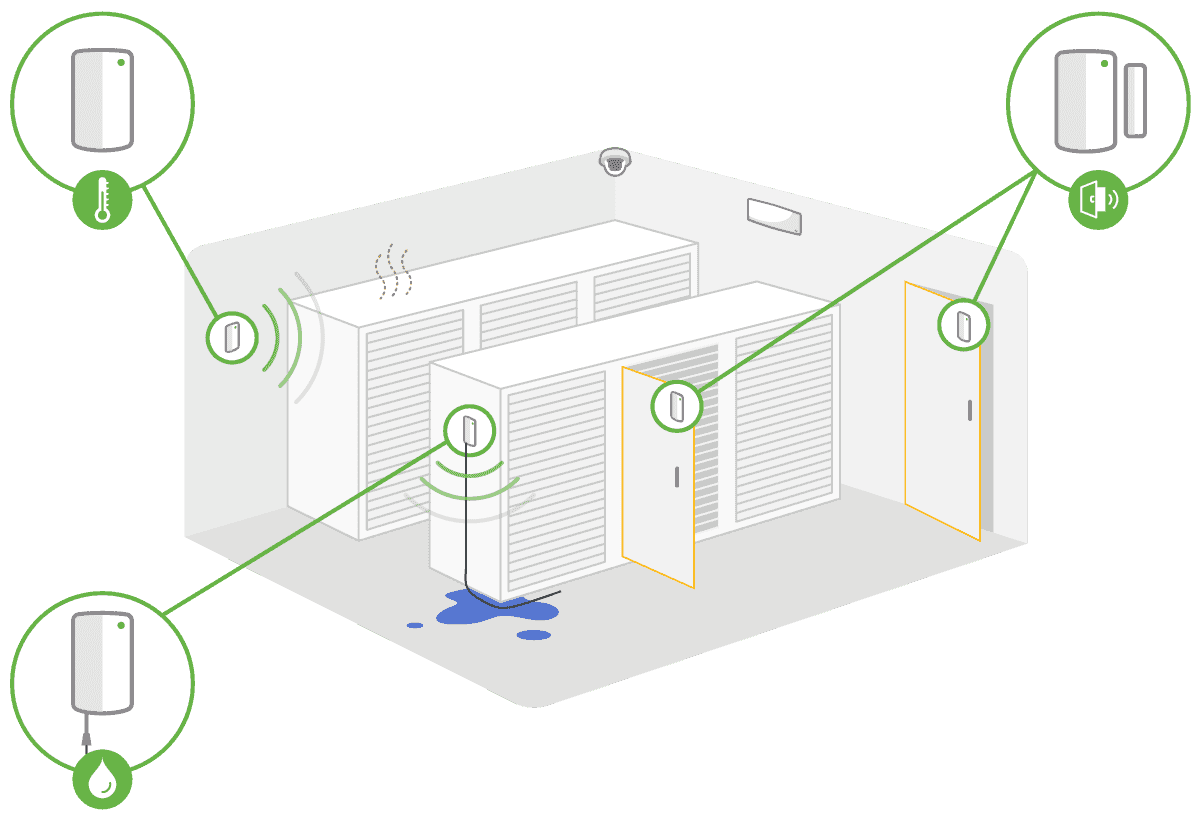
Today’s networks aren’t just about connectivity. They’re about understanding what’s happening in your environment — temperature swings in network closets, air quality in workspaces, unexpected door openings, or movement within monitored areas. Meraki’s MT and MV portfolio gives you that visibility without heavy infrastructure, proprietary gateways, or complex integrations.
Here’s a current look at the newest sensors and cameras that now anchor Meraki’s smart infrastructure platform.
1) Meraki MT Sensors: Real-Time Visibility Into Your Physical Environment
Many organizations still rely on standalone sensors that require custom wiring, proprietary gateways, and painful maintenance cycles. The Meraki MT line eliminates all that. MT sensors connect wirelessly through your existing Meraki MR access points or MV cameras using BLE — no separate gateways, no complicated install, no siloed management.
Key MT Models Available Now
MT10 – Temperature & Humidity Monitoring
Ideal for network closets, server rooms, HVAC zones, and sensitive storage environments. Tracks:
• Temperature (0°C to 55°C)
• Humidity (up to 95% RH)
• ~4,000 on-board data points for resilience during outages
MT14 & MT15 – Air Quality Sensors
Designed for indoor spaces where employee health, productivity, or compliance matter. Track:
• CO₂ levels
• TVOC
• PM2.5
• Noise levels
• Ambient temperature and humidity
Perfect for meeting rooms, classrooms, retail floors, and modern office environments.
MT20 – Open/Close Sensor
Tracks access activity for doors, cabinets, racks, or secure storage. Helps IT teams detect unauthorized entry in critical zones such as wiring closets or back rooms.
Shared Benefits Across MT
• Wireless connectivity via BLE
• Cloud-native configuration and alerting
• No physical gateways required
• Rapid peel-and-stick or mount installs
• Full visibility through Meraki Dashboard
• API + webhook support for automation
For multi-site SMBs — retail, manufacturing, professional services — MT provides real-world data that directly protects uptime. When a closet overheats at 2 a.m., when air quality drops in a busy office, or when a cabinet opens unexpectedly, you see it instantly. No more guessing or reacting too late.
2) The Latest Meraki MV Cameras: AI-Driven Video & Analytics at the Edge
Cisco Meraki sensors and cameras platform has evolved significantly. The newest models — MV13, MV13X, MV63, MV63X, MV93, MV93X, and the MV Flex line — deliver higher resolution, expanded analytics, stronger low-light performance, and improved storage efficiency.
These cameras aren’t NVR-dependent. They process analytics on the device, store video locally, and stream footage securely through the Meraki cloud. That architecture gives SMB IT teams simplicity, resilience, and enterprise-grade intelligence without the traditional overhead of DVR/NVR systems.
Updated Camera Lineup (2025)
MV13 Series (Indoor Fixed Dome – Entry-Level 4K AI Camera)
Models: MV13 and MV13X
• Up to 4K resolution
• Advanced object detection: people, motion, vehicles
• Improved night vision
• Compact, versatile form factor for offices, classrooms, hallways, or retail suites
• Smart analytics, including heat maps and movement trends
MV13 brings high-end detail to indoor environments while keeping price and install complexity low.
MV63 Series (Outdoor Mini Dome)
Models: MV63 and MV63X
Designed for storefronts, campus perimeters, loading zones, and parking areas.
• 4K resolution
• IK08+ durability, weather resistance
• Excellent low-light performance
• Person and vehicle detection for security and operations
• Smart storage with adaptive retention
This series is ideal for SMBs wanting strong outdoor visibility without the bulk of traditional bullet cameras.
MV93 Series (Fisheye 360° Cameras)
Models: MV93 and MV93X
A single MV93 replaces multiple traditional cameras by offering full-room, wide-area, or open-space visibility.
• 360° fisheye view
• 12 MP sensor, immersive dewarp modes
• Perfect for lobbies, retail centers, warehouses, and shared workspaces
• Strong analytics for people counting, traffic flow, and occupancy insights
MV93 is often used for operational intelligence as much as security — a major win for distributed SMBs using video analytics for staffing, layout optimization, and safety.
MV Flex Series (Modular, Ultra-Compact)
Meraki MV Flex is designed for locations where traditional cameras won’t fit or must remain discreet.
• Modular lens options
• Flexible mounting (ceiling, wall, undercounter)
• Ideal for retail displays, front desks, healthcare areas, or specialty installations
• Smart analytics with edge processing
Flex gives IT teams coverage where fixed domes or outdoor housings are impractical.
Platform-Wide Camera Benefits
Across the portfolio, Meraki delivers:
• Secure boot + signed firmware
• NDAA compliance
• End-to-end encryption
• Smart Retention for efficient storage
• No NVRs required
• Remote troubleshooting (focus assist, snapshot verification, connection tests)
• Cloud analytics through a unified dashboard
For SMBs, this means cameras perform double duty: physical security and operational intelligence — without extra infrastructure.
3) How Meraki Sensors and Cameras Work Together in the Meraki Ecosystem
The power of Meraki isn’t just the hardware — it’s the ecosystem. When MT sensors and MV cameras integrate with your Meraki switches, firewalls, and access points, you create a connected operational layer that improves safety, efficiency, and uptime.
Examples of collaboration across devices:
• Environmental alert + video evidence: An MT10 detects rising temperature; the nearest MV camera captures the room automatically.
• Unauthorized access detection: MT20 triggers an alert, and the MV63 outside the room tags the associated footage.
• Air quality threshold event: MT14 logs a CO₂ spike; HVAC automation activates through webhooks; occupancy analysis from MV93 validates room use.
• Smart branch operations: Cameras measure foot traffic, sensors monitor environmental conditions, and network analytics show client activity — all in one dashboard.
This unified view lets IT teams shift from reactive troubleshooting to proactive operational management.
4) Deployment & Licensing Considerations
When advising SMB or mid-market customers, highlight these practical considerations:
Licensing
• MT sensors use “Meraki Things” licenses (organizations typically get five free to start).
• MV cameras require per-device licenses (license length defines cloud retention + support).
Gateway Requirements
MT sensors need a nearby MR access point or MV camera as a BLE gateway — ensure coverage exists.
Storage Planning
MV Gen 3 and newer models offer smarter retention but still require thoughtful planning around:
• Motion indexing
• Desired retention duration
• On-camera storage vs. cloud archive options
Install Requirements
• MT sensors are peel-and-stick or screw mount.
• Cameras require PoE and may require environmental housings outdoors.
• Flex cameras offer the simplest mounting for tight environments.
Automation & Integration
Use APIs and webhooks to integrate MT/MV data into ticketing systems, HVAC controllers, access control, or custom dashboards.
5) Why This Matters for Growing SMBs
As businesses scale — especially across multiple sites — physical visibility becomes just as important as network visibility. A single missed environmental alert or security gap can trigger downtime, equipment damage, or costly incidents.
Meraki’s newest sensors and cameras give SMB teams:
• Proactive insight instead of reactive firefighting
• Fast, scalable deployment across branches
• A single operational model for all locations
• Real intelligence for staffing, safety, layout planning, and compliance
• Lower overhead due to cloud-native management
You’re not just deploying cameras and sensors — you’re building a smarter, safer, more predictable operation.
Final Thoughts
Meraki continues to advance the idea that physical security and network intelligence belong on the same platform. The latest MT sensors and MV cameras deliver deeper insight, tighter security, and easier deployment for SMBs that want a modern, scalable infrastructure.
If you're expanding sites, upgrading physical security, or looking to unify your IoT and video strategy, we can help map out the right mix of sensors and cameras for your environment — and make sure your Meraki ecosystem is built for growth.
FAQs
How do Meraki sensors connect to the network?
They use Bluetooth Low Energy and connect through nearby Meraki MR access points or MV cameras.
What is the battery life of Meraki MT sensors?
Each sensor can last up to five years, depending on usage and reporting frequency.