Complete Guide To Zero Trust Network Access (ZTNA)

As organizations embrace hybrid work, cloud applications, and distributed teams, traditional network security models are struggling to keep up. Employees now connect from virtually anywhere using a wide range of devices, making the old "trust everything inside the network" approach increasingly risky.
Zero Trust Network Access (ZTNA) has emerged as the modern alternative to VPNs by shifting security away from network perimeters and toward continuous verification. ZTNA authenticates every access request and grants only the minimum permissions necessary.
This guide explains what ZTNA is, why organizations are replacing VPNs, the advantages of adopting Zero Trust, practical implementation tips, and how to evaluate the right solution for your business.
What Is Zero Trust Network Access?
Zero Trust Network Access (ZTNA) is a secure remote access model built on the Zero Trust principle of "never trust, always verify." ZTNA authenticates, authorizes, and validates every connection request before granting access.
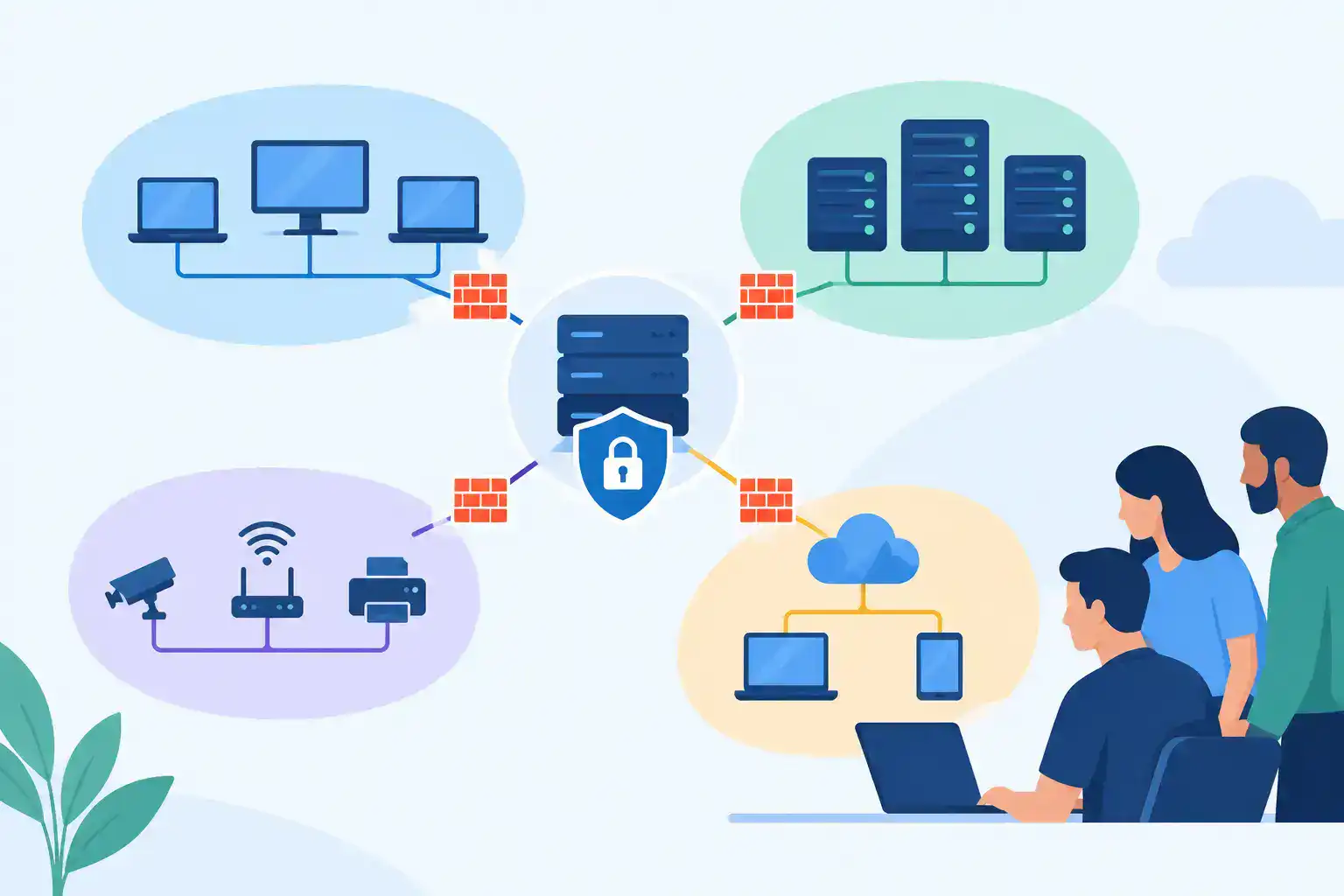
Unlike traditional VPNs, which often provide broad access to an organization's network after a successful login, ZTNA limits users to only the applications and resources they are explicitly permitted to use. This application-level access reduces the attack surface while helping prevent unauthorized lateral movement across the network.
Modern ZTNA solutions continuously evaluate several factors before and during each session, including:
User identity
Multi-factor authentication status
Device health and compliance
Location and network context
Security policies established by IT
Because trust is never permanent, access decisions continue throughout the user's session rather than ending after the initial login.
Why the Traditional VPN Model Is Falling Behind
Virtual Private Networks (VPNs) were originally designed when employees primarily worked inside office buildings and business applications were hosted on-premises. Today's environments look dramatically different.
Organizations now rely on:
Remote and hybrid employees
Cloud platforms
SaaS applications
Contractors and third-party vendors
Personal and mobile devices
Traditional VPNs struggle in these environments because they typically grant users broad network access once authenticated.
This creates several challenges:
Compromised credentials may expose large portions of the internal network.
Attackers can move laterally after gaining access.
VPN performance often declines as more remote users connect.
Managing VPN infrastructure becomes increasingly complex.
ZTNA addresses these limitations by eliminating implicit trust and granting access only to the specific applications users need.
How ZTNA Works Differently From VPN
VPNs create encrypted tunnels into an organization's internal network. Once connected, users often have visibility into resources they don't actually need.
Instead of connecting users to the network itself, ZTNA connects them directly to authorized applications after evaluating identity, device posture, and contextual risk.
A typical ZTNA workflow includes:
User requests access
ZTNA verifies the user’s identity.
ZTNA checks device posture.
ZTNA evaluates security policies.
ZTNA grants access only to approved applications.
ZTNA monitors activity throughout the session.
This limits exposure if an attacker compromises credentials.
Six Key Benefits of ZTNA Over VPN
Transitioning to a Zero Trust architecture provides organizations with significant operational and security advantages. By shifting away from traditional perimeter-based security, businesses can better protect their critical assets while empowering their workforce. Here are the top six benefits of choosing ZTNA over a legacy VPN.
1. Reduces the Attack Surface
Users can access only authorized applications rather than the entire corporate network, making it much harder for attackers to move laterally. For your business, this means a far lower risk of a widespread, costly data breach.
2. Enforces Least-Privilege Access
ZTNA grants only the permissions users require for their specific roles, reducing unnecessary exposure to sensitive systems. This helps keep your most critical data secure, helping you avoid compliance penalties and reputational damage.
3. Improves Visibility
Administrators gain greater insight into who is accessing applications, from which devices, and under what conditions. This allows your IT team to quickly identify and respond to suspicious activity before it escalates into a major security incident.
4. Enhances User Experience
Users connect directly to applications without the complexity of traditional VPN connections, resulting in faster, more direct access. This boosts employee productivity and reduces frustrating help desk tickets related to connectivity issues.
5. Supports Modern Work Environments
ZTNA was designed for cloud-first organizations, making it ideal for remote employees, hybrid workforces, and distributed teams. This gives you the flexibility to securely scale your operations and hire talent from anywhere.
6. Strengthens Compliance
Continuous verification, detailed access logging, and policy enforcement help organizations meet security and regulatory requirements. This simplifies your audit processes and provides peace of mind that your business meets industry standards.
Top Use Cases for ZTNA
ZTNA supports a variety of modern business scenarios, including:
Remote workforce security
Hybrid work environments
Secure contractor and vendor access
Bring Your Own Device (BYOD) programs
Cloud application protection
Branch office connectivity
Privileged administrative access
Mergers and acquisitions
Because ZTNA grants access on an application-by-application basis, organizations can provide secure connectivity without exposing their entire infrastructure.
Expert Tips for Navigating Your Zero Trust Rollout
Zero Trust succeeds or fails on process, not the product you buy.
Best practices include:
Start with strong identity management.
Require multi-factor authentication.
Inventory applications and users.
Apply least-privilege policies.
Segment critical resources.
Continuously monitor activity.
Educate employees about new access procedures.
Organizations that begin with a phased rollout typically experience smoother adoption and fewer operational disruptions.
Balancing Security With a Frictionless User Experience
The usual objection to tighter access control is that it slows people down. Adaptive policies are how ZTNA answers that.
Modern ZTNA platforms provide smooth authentication while still enforcing rigorous security controls. Adaptive policies can reduce unnecessary authentication prompts for low-risk users while stepping up verification when they detect suspicious behavior.
What To Look For When Evaluating A ZTNA Platform
Compare platforms against this checklist. A gap in any one of these usually resurfaces later as integration work.
Look for platforms that include:
Identity provider integration
Multi-factor authentication support
Device posture assessment
Granular policy controls
Continuous monitoring
Full audit logging
Cloud scalability
SASE compatibility
Simple deployment and management
Choosing a platform that integrates well with your existing security stack can reduce implementation complexity.
Zero Trust Frameworks Worth Knowing
Organizations evaluating Zero Trust should become familiar with several industry-recognized frameworks.
These include:
NIST Zero Trust Architecture
CISA Zero Trust Maturity Model
Vendor implementations from leading cybersecurity providers
While implementation approaches vary, they all emphasize continuous verification, least-privilege access, and identity-centric security.
How To Get Started With Zero Trust At Your Organization
Transitioning to a Zero Trust architecture doesn't have to happen all at once. Most organizations achieve better results by taking a phased approach that prioritizes their most critical assets and gradually expands Zero Trust principles across the environment. By focusing on incremental improvements, IT teams can strengthen security while minimizing operational disruptions and ensuring users continue to work productively throughout the transition.
The seven steps below move from assessment to steady-state monitoring. You can run them in order, and you don't need every application covered before you start seeing value.
Assess Your Current Security Architecture
Before implementing Zero Trust Network Access, evaluate your organization's existing infrastructure, users, devices, applications, and security controls. Understanding who needs access to what and how they currently connect helps identify potential vulnerabilities, unnecessary permissions, and legacy technologies that may require modernization. A thorough assessment also establishes a baseline for measuring the success of your Zero Trust initiative.
Identify High-Value Applications
Not every application carries the same level of business risk. Start by identifying mission-critical systems that contain sensitive data or support essential business operations. Prioritizing these applications allows you to focus your initial Zero Trust efforts where they'll have the greatest security impact while reducing the likelihood of unauthorized access to valuable resources.
Implement Multi-Factor Authentication
Identity is at the core of every Zero Trust strategy. Strengthen user authentication by implementing multi-factor authentication (MFA) across your organization. Requiring users to verify their identity using multiple authentication factors reduces the risk of compromised credentials and helps ensure only authorized users gain access to business applications.
Deploy ZTNA For A Pilot Group
Rather than rolling out Zero Trust across the entire organization immediately, begin with a smaller group of users or a limited set of applications. A pilot deployment allows IT teams to validate policies, identify configuration issues, gather user feedback, and refine the overall implementation strategy before expanding to additional users and workloads.
Refine Policies Based On Usage
Zero Trust is not a one-time implementation. As users interact with applications and business needs evolve, review access logs, monitor user behavior, and adjust policies accordingly. Continuous refinement helps eliminate excessive permissions while ensuring employees maintain secure and efficient access to the resources they need.
Expand Deployment Gradually
Once the pilot has been successfully validated, gradually extend Zero Trust policies to additional departments, users, applications, and locations. Expanding in phases reduces implementation risk, simplifies change management, and allows your IT team to address challenges before they affect the broader organization.
Continuously Monitor And Optimize
Cybersecurity threats, business requirements, and user behavior constantly change. Continuous monitoring enables organizations to detect suspicious activity, assess emerging risks, and improve security policies over time. Regular reviews ensure your Zero Trust environment remains effective as your organization grows and evolves.
Why Partner With Hummingbird Networks for Your Zero Trust Journey
Successfully executing a Zero Trust transition requires deep engineering expertise across networking, cloud infrastructure, and cybersecurity policy. Partnering with an experienced solution provider simplifies architecture design, prevents configuration errors, and accelerates time-to-value.
Hummingbird Networks directly delivers end-to-end ZTNA solution design, platform procurement, deployment, and ongoing security management services. We can work with you whether your goal is replacing outdated VPN appliances, implementing SASE architecture, or securing hybrid workforce access.
Frequently Asked Questions
Is ZTNA replacing VPN?
Many organizations now use ZTNA as either a replacement for or complement to traditional VPNs. The right approach depends on existing infrastructure and business requirements.
Can ZTNA work with cloud applications?
Yes. ZTNA is particularly well suited for cloud and SaaS environments because it secures application access without requiring network-level connectivity.
Is ZTNA only for large enterprises?
No. Organizations of all sizes can benefit from Zero Trust principles, particularly those with remote employees or cloud-based resources.
Can VPN and ZTNA coexist?
Absolutely. Many organizations deploy both technologies during a phased migration strategy.
Ready To Move Beyond VPN?
Every organization's security needs are different, but the trend is clear: perimeter-based security alone is no longer enough.
Zero Trust Network Access provides a more secure, flexible, and scalable way to protect modern workforces while delivering a better user experience.
Whether you're replacing legacy VPN infrastructure or strengthening your existing security posture, adopting Zero Trust principles can help reduce risk without sacrificing productivity.
Talk to Hummingbird Networks' security team about evaluating and rolling out Zero Trust Network Access for your organization. Get a quote or explore our Security Assessment services.