Enterprise Network Equipment Market Trends

Table of Contents
- What is shaping the enterprise network equipment market
- Why demand is still strong
- The biggest buying trends IT teams should watch
- Where buyers get tripped up in the enterprise network equipment market
- How to buy more intelligently
- What this means for SMB and midmarket IT leaders
- A practical way to read the market right now
- FAQs
A switch refresh that looked simple two years ago now touches security policy, cloud management, power budgets, wireless coverage, and licensing. That is why the enterprise network equipment market feels harder to read than it used to. For IT leaders with lean teams, the issue is not just what hardware exists. It is figuring out what to buy, when to buy it, and how to avoid getting stuck with the wrong mix.
For small and midsize businesses, that pressure is real. You are expected to support growth, reduce risk, control costs, and keep users productive, often without a deep bench of network specialists. The market has responded with more options, more software dependency, and more overlap between networking and security. That creates opportunity, but it also creates room for expensive mistakes.
What is shaping the enterprise network equipment market
The biggest shift is that network buying is no longer just a hardware decision. A core switch or wireless upgrade now affects visibility, segmentation, remote management, and how quickly your team can troubleshoot an outage. In many environments, it also affects how much recurring spend shows up in next year’s budget.
That matters because refresh cycles have changed. Many organizations delayed upgrades during supply chain uncertainty, then stretched aging infrastructure a little longer than planned. Now they are dealing with stacked technical debt - unsupported gear, patching concerns, inconsistent wireless performance, and limited capacity for newer applications.
At the same time, buying behavior has become more conservative. IT managers are not looking for flashy transformation projects. They are looking for stable, supportable infrastructure that can be deployed without creating another operational problem. In practice, that means proven vendors, validated configurations, and fewer surprises during implementation.
Why demand is still strong
The enterprise network equipment market continues to move because the business drivers have not gone away. Offices still need reliable wired and wireless access. Branches still need secure connectivity. Cameras, phones, access points, and edge devices still need power and bandwidth. And every one of those systems becomes more visible when users complain.
Hybrid work changed some traffic patterns, but it did not reduce the need for network investment. In many cases, it raised the bar. Users now expect the same application performance whether they are in headquarters, a branch, or moving between sites. Security teams expect tighter access control. Leadership expects uptime without hearing about the complexity underneath it.
That is why refresh projects are often tied to business risk rather than pure expansion. A lot of network spending is driven by the need to replace aging equipment before failure, standardize management, and close security gaps. If a switch stack is near end of support or wireless coverage is hurting productivity, waiting may cost more than acting.
The biggest buying trends IT teams should watch
Cloud-managed networking has become a serious factor in purchasing decisions. For smaller IT teams, centralized visibility and simpler administration can save real time. The trade-off is that cloud management usually shifts more cost into licensing and subscription planning. The convenience is real, but so is the need to model long-term spend.
Security is also pushing network design upstream. More buyers want segmentation, policy enforcement, and easier integration with firewalls and identity controls. That does not mean every company needs a complete redesign. It does mean networking decisions are being judged by how well they support security operations, not just throughput and port count.
There is also a stronger focus on standardization. Instead of mixing too many platforms over time, organizations are trying to reduce operational drag by aligning around a smaller set of vendors and management tools. That can improve supportability, but it needs to be done thoughtfully. Standardization helps most when it reduces complexity without forcing a bad fit in a particular site or use case.
Lead times and availability still matter too, even if conditions are better than they were at the height of supply disruption. Project schedules can still slip if the exact model you planned around is constrained. Smart buyers now build more flexibility into hardware selection and validate substitutes early instead of scrambling later.
Where buyers get tripped up in the enterprise network equipment market
One common mistake is buying for the immediate pain point without thinking about the next refresh cycle. If you replace access switches but ignore uplinks, power requirements, or management consistency, you may solve one issue and create two more. The cheapest short-term path can become the most expensive one to support.
Another issue is underestimating licensing. Hardware pricing gets attention, but recurring software costs often shape the real budget. That is especially true when organizations move toward cloud-managed environments or advanced support tiers. A low initial quote does not tell you much unless the licensing and service terms are clear.
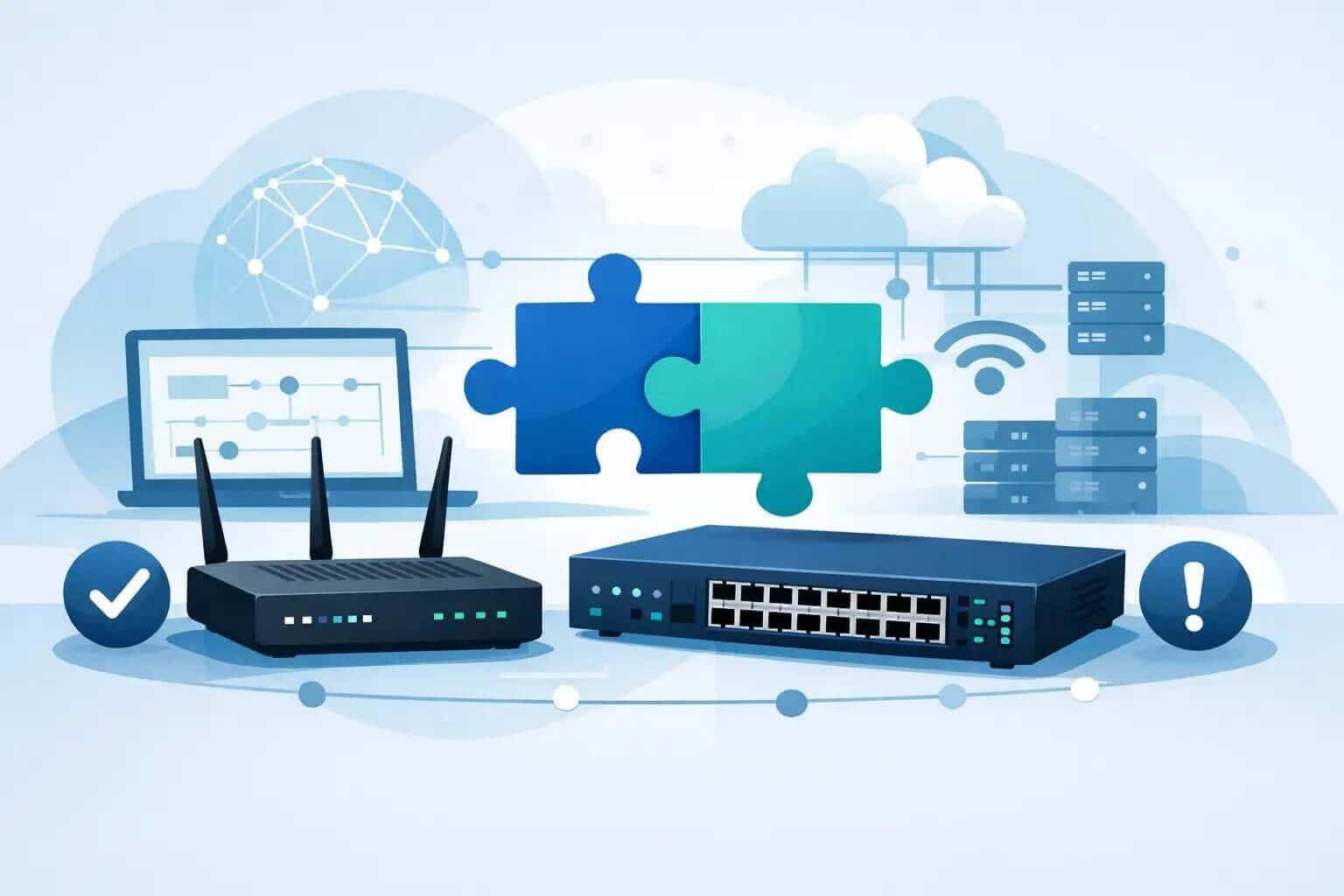
Compatibility errors also show up more often than teams expect. An access point upgrade may require different power capabilities. A switch replacement may affect optics, stacking, or rack power planning. A branch refresh may expose an old WAN design that no longer fits the traffic profile. These are not unusual problems. They are the kinds of details that slow projects down when nobody validates the full configuration.
Then there is the reseller problem. Many IT teams have worked with sellers who can process an order but cannot pressure-test a design, flag a conflict, or suggest a better path. That leaves the customer carrying the technical and procurement risk at the same time. If your team is already overloaded, that is not support. It is extra work.
How to buy more intelligently
The smartest approach starts with a plain question: what business problem are you solving? If the answer is poor wireless performance, branch instability, aging switches, or security exposure, build the project around that outcome. Do not start with a catalog. Start with the operational issue, the user impact, and the timeline.
From there, create a short list of technical requirements that actually matter. Port density, PoE needs, redundancy, management model, support expectations, and lifecycle timing will usually tell you more than feature overload. This is where discipline pays off. A slightly more expensive platform can be the better decision if it reduces troubleshooting time, avoids another upgrade next year, or fits your team’s skill set.
It also helps to validate the entire bill of materials before approval. That includes hardware, licensing, transceivers, power supplies, support coverage, and any dependencies that could stall deployment. For Cisco and Meraki environments, especially, small configuration details can create big downstream headaches if they are missed early.
Good procurement support is not about flashy promises. It is about fast, accurate quoting, technical validation, realistic alternatives, and clear communication about lead times and pricing. That is where a partner with engineering depth tends to outperform a generic online seller.
What this means for SMB and midmarket IT leaders
If you are running a network with 100 to 250 employees, the enterprise network equipment market can feel built for companies with larger teams and bigger margins for error. But that is exactly why process matters. You do not need infinite choice. You need a buying path that reduces risk.
That usually means choosing proven platforms, keeping architecture clean, and working with people who can spot problems before they reach production. It also means recognizing when buying speed matters. A delayed quote, vague compatibility guidance, or poor fulfillment can put your project behind before the first box arrives.
For many teams, the right supplier is part logistics partner and part technical backstop. Hummingbird Networks has worked in that lane for more than 20 years by helping businesses buy Cisco and Meraki with less friction and more confidence. That matters when your team does not have time to chase answers from three different places.
| Market Trend | Why It Matters for SMBs | Key Risk to Watch |
|---|---|---|
| Cloud-Managed Networking | Simplifies management and improves visibility | Higher recurring licensing costs |
| Network Security Integration | Supports segmentation and stronger access control | Poor security alignment across systems |
| Infrastructure Standardization | Reduces operational complexity | Locking into the wrong platform |
| Delayed Refresh Cycles | Extends hardware lifespan temporarily | Unsupported or aging equipment |
| Hybrid Work Demands | Increases expectations for network performance | Inconsistent user experience |
| Hardware Availability & Lead Times | Affects deployment schedules | Delayed projects and substitute hardware issues |
| Licensing Complexity | Impacts long-term budgeting | Unexpected recurring costs |
| Configuration Validation | Prevents deployment problems | Compatibility and power mismatches |
| Vendor & Procurement Support | Reduces IT workload and purchasing risk | Slow quoting and poor technical guidance |
| Lifecycle Planning | Helps avoid emergency upgrades | Higher long-term support costs |
A practical way to read the market right now
Do not read the market as a race toward the newest thing. Read it as a shift toward more accountable buying. The organizations making good decisions are not necessarily spending the most. They are matching infrastructure to business risk, validating configurations carefully, and treating procurement as part of network success rather than an afterthought.
If your environment is stable, that may mean planning the next refresh before an outage forces it. If your infrastructure is straining, it may mean tightening standards and simplifying management. If costs are under pressure, it may mean comparing lifecycle value instead of only first-line pricing.
The market will keep changing. Your job is not to predict every move. It is to make the next decision with enough clarity that six months from now, your team is dealing with fewer surprises, not more. If you want a second set of eyes before you commit, Get a Quote or Validate My Configuration.
FAQs
What is the enterprise network equipment market?
The enterprise network equipment market includes switches, wireless systems, routers, and networking solutions businesses use to support connectivity and security.
Why are companies upgrading their network infrastructure?
Companies are upgrading network infrastructure to improve performance, strengthen security, and support modern cloud and hybrid work environments.