Is The GLC-SX-MM Transceiver Right For Your Switch?
Table of Contents
- Growing networks call for smarter infrastructure
- Issues When Considering Gigabit Ethernet In Your Growing Office
- Twisted Copper vs. Fiber Optic Gigabit Ethernet
- Using a GLC-SX-MM Transceiver to Connect Fiber Optic Gigabit Ethernet
- GLC-SX-MM Part Information
- Why Upgrading Matters for Growing Businesses
- Strategic Considerations for Your IT Team
- How to Get Started
- FAQs
 Growing networks call for smarter infrastructure
Growing businesses have growing networks. It’s an unavoidable side-effect of expansion and maturation in a company.
If you’ve hit the point where you’re beginning to consider purchasing a large property, or opening a second office, you may start running into the limitations of last-decade’s technology. Standard BaseT100 Ethernet is fine for a small office, but it isn’t sufficient to handle heavier network use. As your network expands, you might experience problems like dropout in your VoIP calls, sluggish data retrieval speeds, spotty WiFi coverage across large areas, difficulty leveraging cloud-based applications, or poor video streaming quality.
If any of this sounds familiar, it may be time to start thinking about an upgrade to gigabit Ethernet, which moves at ten times the speed of traditional Ethernet.
Issues When Considering Gigabit Ethernet In Your Growing Office
There are, of course, a number of issues involved in a major network infrastructure upgrade – but the truth is that as your organization continues to grow, this upgrade is going to happen sooner or later.
When contemplating a move to gigabit Ethernet, one of the most immediate concerns people have is how much new hardware they'll have to purchase. The good news is that one of the basic issues — providing connectivity at all — is generally quite manageable.
If you’ve purchased your networking equipment in the last few years, it likely has industry-standard SFP ports, based on Cisco’s specification. These inexpensive small-form-factor pluggable (SFP) modules allow transceivers like the GLC-SX-MM to be plugged in and provide instant gigabit Ethernet connectivity.
Twisted Copper vs. Fiber Optic Gigabit Ethernet
Another major consideration is whether you want to continue using copper-wire cabling or upgrade to fiber-optic cabling in your offices. While fiber is more expensive up front, it provides several advantages over copper, while still delivering the same gigabit speeds.
Longer cable lengths: Copper (Category 5/5e/6) typically runs reliably up to ~100 metres before signal loss becomes a concern. Fiber optic links can span two to five hundred feet (or more) without comparable degradation.
Less interference: Fiber gives off no radio frequency interference, allowing it to coexist more cleanly in an office with a lot of wireless devices.
Better security posture: Because fiber does not radiate in the same way copper can, tapping into fiber is more complex — making it inherently more secure in locations where physical access may be less controlled.
Just as with copper, transceivers like the GLC-SX-MM allow you to link fiber-optic gigabit Ethernet into your existing equipment. If you’re looking toward the future, moving away from copper is a strong choice. Many businesses operating in large-scale office buildings, distributed campuses, or real-time collaboration networks are turning to fiber.
Using a GLC-SX-MM Transceiver to Connect Fiber Optic Gigabit Ethernet
One of the biggest advantages of Cisco’s SFP ecosystem is that it’s hot-swappable. It doesn’t matter what the device is — from servers to your switch to simple Ethernet cards: if it has an SFP port on it, it can support a variety of transceivers for different functions, through one standardized interface. That standardization means third-party transceivers (when chosen carefully) can behave just as well as the official Cisco-branded units.
So, if you decide that fiber-optic gigabit Ethernet is what you need for your future business communications network, the GLC-SX-MM transceiver is truly simple to install and use. Plug it into your switch (or router/module), plug in the new fiber cable, and it should integrate within a few moments.
There are several different gigabit Ethernet standards out there, so it’s wise to do your research and ensure you choose the standard that best fits your future-state vision for your business. But keep in mind: if you want to connect existing devices to the new network via fiber, transceivers like the GLC-SX-MM are critical.
GLC-SX-MM Part Information
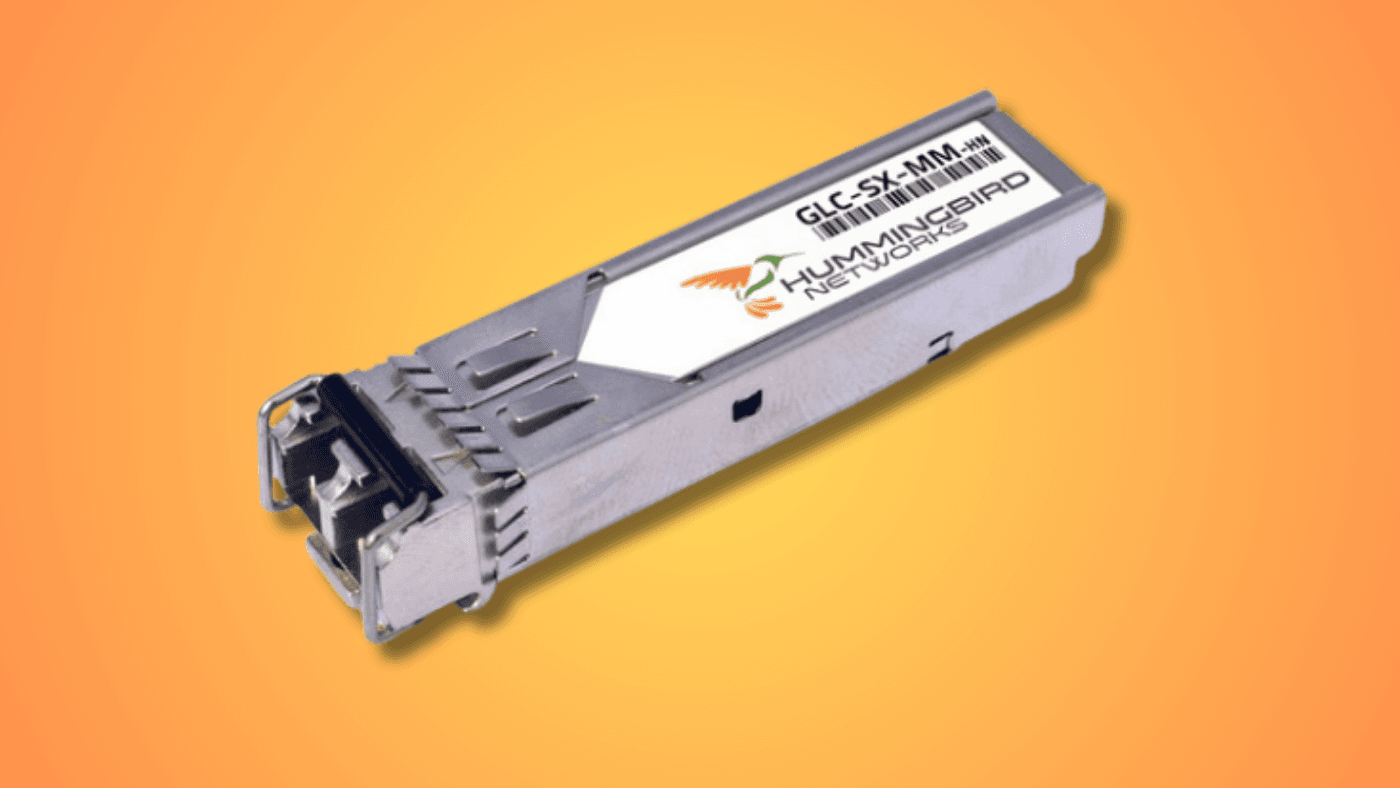
The Cisco GLC-SX-MM is a 1000BASE-SX SFP transceiver module designed for multimode fiber (MMF), with the following key specifications:
Operates at 850 nm wavelength, using duplex LC connector on MMF.
GIven standard multimode fiber (50/125 µm), link spans up to about 550 m are supported.
Compatible with the IEEE 802.3z 1000BASE-SX standard.
Hot-swappable SFP form-factor modules ensure minimal downtime for upgrades.
Operating case temperature (standard) 0°-70 °C; some variants may support extended temperatures.
RoHS compliant and supports standard SFP multi-source agreement (MSA) footprint for interoperability.
For a growing business network, what this means is you don’t need to rip out your whole switch infrastructure: if your switch has an SFP port, you can simply plug in one of these transceivers and move to fiber when you're ready. From a partner and advisor perspective, that flexibility is a win—you can plan the move on your timeline rather than being forced by hardware limitations.
Why Upgrading Matters for Growing Businesses
When network demands scale—more users, more devices, more WiFi, more video, more cloud traffic—old copper runs and 100 Mb link segments start to show their age. Performance bottlenecks begin to create operational friction: call quality degrades, data transfers slow down, backup windows expand, branch office connectivity becomes less dependable.
By upgrading to gigabit (or better) Ethernet and leveraging fiber when appropriate, you future-proof the infrastructure. You enable higher device densities, support more bandwidth-intensive services, extend your network footprint (multiple offices, campus expansions), and improve reliability.
And when you pair that infrastructure with transceivers like the GLC-SX-MM, you gain modularity. You can upgrade one link at a time, minimize disruption, and spread your investment over time rather than needing a wholesale rip-and-replace.
Strategic Considerations for Your IT Team
When advising IT leaders through this transition, keep these key topics front of mind:
Inventory current infrastructure. Identify how many switches have SFP ports, whether existing copper runs need replacement, and whether the fiber path is in place (or needs installing).
Map growth trajectories. Think one, three, and five years out: How many offices? How many users? What new services (VoIP, video, remote sites, cloud applications) will be added?
Budget for cabling and termination. Fiber fiber-optic cabling and termination costs are higher up front than copper, but often lower in maintenance and long-term value.
Choose modular over monolithic. Devices with SFP ports give you flexibility. A transceiver like the GLC-SX-MM gives you plug-and-play migration potential.
Plan for redundancy and future-proofing. Fiber links allow for greater distances, less interference, and easier scaling. While copper still has a role, fiber is increasingly the default for backbone and inter-office links.
How to Get Started
If you’re seeing the signs—voice or video dropouts, sluggish file access, large WiFi dead zones, cloud apps underperforming—it’s time for a conversation about infrastructure refresh. Start with a network assessment: identify the weakest links, measure current utilization, understand where your growth will push you.
Then evaluate: can your current switches handle SFP modules? Do the existing cable paths support fiber? Do you have branch or remote offices that can benefit most from fiber? From there you can build a phased plan: e.g., upgrade the backbone to gigabit or 10 Gbps, add fiber links between buildings, convert critical copper runs to fiber, and use GLC-SX-MM transceivers (or newer ones) where cost-effective.
As your trusted partner in network infrastructure, Hummingbird Networks can help you with a future-focused consultation: validating your current cabling, recommending transceivers and hardware, planning the migration in a way that minimizes disruption and maximizes ROI.
Final Thoughts
In the world of growing businesses, networks scale — not just in users and devices, but in complexity and demand. Staying stuck on outdated Ethernet links and copper cabling can become a drag on growth, user experience, and competitive agility.
Upgrading to gigabit (or higher) Ethernet, and selecting fiber-optic links where appropriate, is not just a “nice to have” — it’s becoming a baseline requirement. And using modular transceivers like the GLC-SX-MM means you don’t have to throw out the whole infrastructure to make the jump. You can migrate smartly, strategically, and with the flexibility that IT leaders demand.
If your network is showing the tell-tale signs of strain, let’s talk. Hummingbird Networks is ready to help you build a network that supports growth, delivers performance, and keeps you ahead of the curve.
FAQs
How fast is the GLC-SX-MM?
It supports 1 Gbps data rates compliant with the IEEE 802.3z 1000BASE-SX standard.
What is the maximum distance for the GLC-SX-MM?
Up to 550 meters on 50/125 µm fiber and 220 meters on 62.5/125 µm fiber.