SD-WAN and 5G Happily Working Together

Table of Contents
Most business traffic now lives in the cloud — SaaS, IaaS, collaboration tools, voice, video, IoT, you name it. Old-school router-based WANs were never designed for that world. They were built for backhauling traffic into a central data center, not for sending everything directly to Salesforce, Microsoft 365, Webex, or AWS. That gap is what pushed SD-WAN and 5G from “interesting” to “mandatory.” Together, they give IT teams a way to build WANs that are faster, more resilient, and much easier to manage across dozens or hundreds of locations.
Why SD-WAN Beats Traditional Router-Based WANs
A traditional WAN is tied to specific physical routers and MPLS circuits. You configure each box individually, you backhaul a lot of cloud traffic through a hub, and you pay carrier-grade prices for the privilege.
SD-WAN flips that model. It uses software to create a secure overlay across multiple underlay connections — broadband, fiber, LTE, 5G, sometimes even legacy MPLS — and then steers traffic intelligently based on policy and real-time performance.
Most modern SD-WAN platforms (including Cisco and Meraki) share the same architectural building blocks:
Edge devices at branches, data centers, and cloud on-ramps that terminate tunnels, apply security policies, and route traffic.
An SD-WAN controller that has a global view of the WAN and decides which paths are best for which applications.
An orchestrator / cloud dashboard where IT sets policies once and pushes them out everywhere, instead of box-by-box CLI work.
From there, SD-WAN does the things traditional WANs struggle with:
Application-aware routing
Traffic isn’t treated as generic IP anymore. SD-WAN identifies applications and steers them over the best available path in real time.
Voice and video get low-latency, low-loss paths.
Critical SaaS gets prioritized over bulk traffic.
Low-priority or untrusted traffic can ride cheaper broadband links.
Use any mix of circuits
A single SD-WAN edge can blend:
DIA (direct internet access)
Broadband cable/fiber
LTE / 5G
Legacy MPLS (if you still need it)
The overlay hides the complexity and lets you phase out expensive circuits on your own schedule.
Centralized policy and zero-touch deployment
Policies (security, QoS, routing) are defined centrally and pushed to all sites. New branches can be deployed by non-technical staff — plug in the appliance, it phones home, pulls its config, and comes online.
Real-world business benefits
For growing businesses, this rolls up into very tangible outcomes:
Lower connectivity costs by shifting away from MPLS-heavy designs.
Better cloud performance using local breakout and optimized paths.
Simpler operations through centralized management.
Faster branch turn-ups — especially when 5G is in the mix as primary or backup.
5G Today: Beyond the Hype, Solid in the Field
5G is no longer just a promise on a slide deck. Carriers across the U.S. now operate mature 5G networks with:
Higher peak and average speeds than LTE in most metro and many suburban areas.
Lower latency (especially on mid-band and mmWave where available).
Better capacity per cell, making it more realistic to support dense device populations and high-use areas.
Is it always “1000x faster” than 4G? No. That was marketing. But in practice, business-grade 5G often delivers:
Broadband-class connectivity with cellular flexibility.
Strong enough throughput and latency to act as primary or secondary WAN links for branch SD-WAN deployments.
Coverage options (fixed wireless, outdoor CPE, embedded 5G routers) that didn’t exist in earlier generations.
5G is especially attractive to:
New or temporary sites where wired circuits are slow to provision.
Rural or hard-to-reach locations where fiber is cost-prohibitive.
Retail, construction, and pop-up operations that need instant, portable connectivity.
IoT is benefiting as well, with 5G and LTE-M supporting higher device densities and better energy profiles depending on the use case. Cloud, AI, and edge workloads are no longer buzzwords — they’re driving how these links are designed and consumed.
How SD-WAN and 5G Fit Together in 2026 and Beyond
On their own, SD-WAN and 5G are strong. Combined, they’re much more powerful.
Modern SD-WAN platforms treat 5G as just another underlay — but often the most flexible one. Think of 5G as an on-demand, high-performance WAN circuit that you can spin up anywhere you can get signal, and SD-WAN as the traffic cop that decides when and how to use it.
Typical SD-WAN + 5G use cases
5G as primary access
For new branches where wired internet isn’t installed yet.
For rural sites where 5G is faster/more reliable than DSL or low-grade cable.
5G as high-availability backup
SD-WAN monitors link quality continuously.
If fiber or broadband degrades or fails, traffic fails over to 5G automatically.
When primary comes back, traffic shifts back without manual intervention.
5G for specific traffic classes
Critical apps (POS, cloud ERP, key SaaS) can be pinned to 5G under certain conditions.
Non-critical or bulk traffic stays on cheaper broadband paths.
Why SD-WAN is essential for serious 5G use
5G has plenty of upside, but it also has quirks: variable signal quality, spectrum differences, and dense cell topologies. SD-WAN helps tame that by:
Continuously measuring jitter, loss, and latency on the 5G link.
Steering traffic away if performance dips below policy thresholds.
Combining 5G with other underlays for active-active or active-standby scenarios.
On the security side, SD-WAN platforms (especially when paired with SASE features) can:
Apply consistent security policies regardless of whether traffic rides fiber, broadband, or 5G.
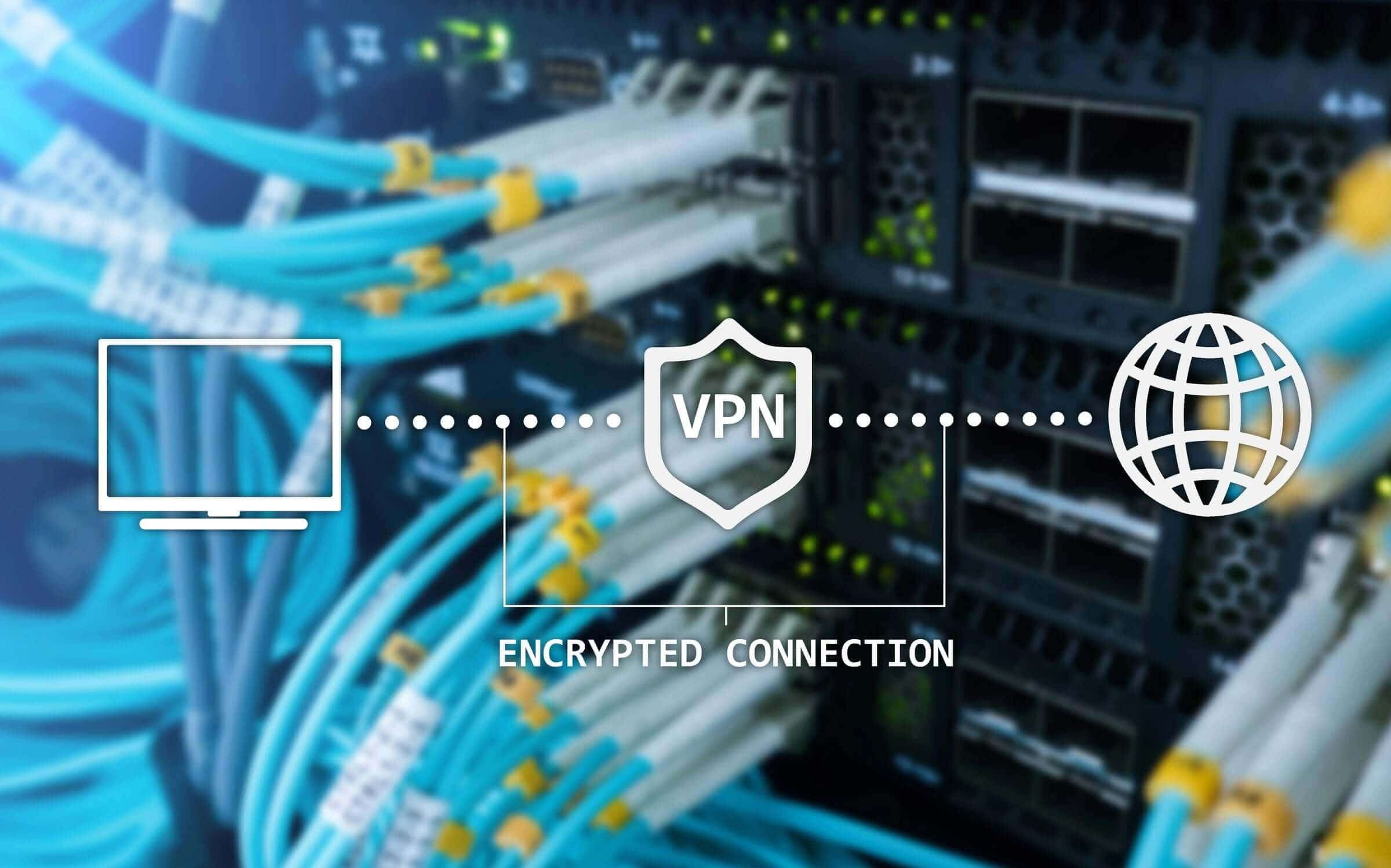
Encrypt all WAN traffic, so cellular becomes just another secure transport, not a special case.
Integrate secure web gateways, cloud firewalls, and zero-trust access into the same policy framework.
In other words: SD-WAN turns 5G from “just another internet connection” into a controllable part of your overall WAN design.
AI, Automation, and 5G Operations
There’s real progress on the AI side too. Many SD-WAN and 5G-integrated platforms now use machine learning to:
Predict link degradation and preemptively shift traffic.
Identify application performance issues and suggest policy changes.
Tune QoS in near real time based on observed patterns instead of just static rules.
On the 5G carrier side, AI/ML is being used to optimize cell utilization and power management in dense networks. As a business user, you don’t control that layer — but you benefit from it when combined with SD-WAN’s path selection and policy engine.
Network slicing is also moving from concept toward real offerings in certain markets. For now, most SMBs see it indirectly — through business-focused 5G plans and QoS tiers — but SD-WAN is well-positioned to take advantage of slices once they’re exposed in more granular ways.
Where Hummingbird Networks Fits In
You don’t need to be an SD-WAN or 5G architect. That’s our job.
Hummingbird Networks works with Cisco and Meraki SD-WAN and 5G-capable platforms to help IT teams:
Design hybrid WAN architectures that blend fiber, broadband, LTE, and 5G intelligently.
Select the right edge appliances, 5G gateways, and licenses for each site.
Build policy frameworks that prioritize the right apps and users.
Plan migrations away from legacy MPLS or router-based topologies without disruption.
Validate configurations and optimize for real-world performance, not just lab specs.
You get one partner who understands both the commercial side (circuits, contracts, licensing) and the technical side (routing, security, QoS, telemetry).
Ready to Rethink Your WAN?
SD-WAN and 5G are no longer “nice to have” experiments. For most growing organizations, they’re the practical way to:
Cut WAN costs
Improve cloud performance
Spin up sites faster
Add resilience without overbuilding
If your current WAN design is straining under cloud traffic, remote work, or new sites, it’s a good time to review how SD-WAN and 5G can change the picture. Hummingbird can help you map where you are today, where you want to go, and what mix of Cisco/Meraki SD-WAN and 5G options will get you there with the least friction and the most long-term value.
FAQs
How does SD-WAN differ from traditional WAN?
Unlike router-based WANs, SD-WAN uses cloud-based software to control traffic, reduce costs, and enhance flexibility.
Why is 5G important for networking?
5G provides faster speeds, lower latency, and greater device connectivity, making it ideal for IoT and cloud-based operations.