
Adtran Switches
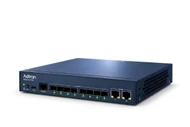
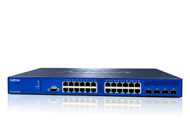

Build reliable business, enterprise, campus, branch, and service-provider networks with ADTRAN switches from Hummingbird Networks. ADTRAN NetVanta switching solutions provide managed Ethernet connectivity, Layer 2 and Layer 3 networking, Power over Ethernet, high-speed fiber uplinks, VLAN support, Quality of Service, network security, and scalable switching for organizations ranging from small businesses to distributed enterprise environments.
ADTRAN switch families include the NetVanta 1560 Series, NetVanta 1570 Series, NetVanta 1760 Series, and other compatible NetVanta switching platforms designed for access, aggregation, PoE, voice, cloud applications, IoT, and high-bandwidth business networking.
Choosing the correct ADTRAN switch depends on Ethernet port count, PoE requirements, uplink speed, Layer 3 functionality, fiber connectivity, network size, redundancy requirements, and the devices the switch must support.
ADTRAN Network Switches for Business & Enterprise Networks
ADTRAN offers managed Ethernet switching platforms designed to support secure, scalable wired networks across business, enterprise, campus, branch, and distributed environments.
ADTRAN switches can support applications such as:
- Desktop and workstation connectivity
- Wireless access points
- VoIP phones
- Security cameras
- Servers
- Network appliances
- IoT devices
- Building automation
- Fiber uplinks
- Campus networking
ADTRAN NetVanta Switches
NetVanta is ADTRAN's business networking family for Ethernet switching, routing, and related enterprise connectivity.
Current ADTRAN Ethernet switch families include:
- NetVanta 1560 Series
- NetVanta 1570 Series
- NetVanta 1760 Series
Older and existing NetVanta switch platforms also remain deployed across many business and enterprise networks.
ADTRAN NetVanta 1560 Series
The ADTRAN NetVanta 1560 Series consists of enterprise-class, fully managed Layer 3 Gigabit Ethernet switches designed for resilient business networking, IoT, cloud applications, and voice over IP.
The family includes:
- NetVanta 1560-08
- NetVanta 1560-24
- NetVanta 1560-48
Available configurations include non-PoE and PoE+ models with different power budgets.
ADTRAN NetVanta 1560-08
The NetVanta 1560-08 provides eight Gigabit Ethernet access ports and two 1 Gigabit SFP uplink ports.
ADTRAN offers variants with:
- Standard non-PoE switching
- 65-watt PoE capability
- 150-watt PoE capability
This compact configuration can be suitable for smaller offices, remote sites, edge networks, and environments requiring a limited number of managed Ethernet ports.
ADTRAN NetVanta 1560-24
The NetVanta 1560-24 provides 24 Gigabit Ethernet ports and two 10 Gigabit SFP+ uplink ports.
Available PoE configurations can provide up to 370 watts or 740 watts of PoE power on supported models.
This makes the 1560-24 suitable for networks supporting:
- Wireless access points
- VoIP phones
- IP cameras
- Computers
- IoT devices
ADTRAN NetVanta 1560-48
The NetVanta 1560-48 provides 48 Gigabit Ethernet access ports with up to four 10 Gigabit SFP+ uplinks.
Available PoE models support large power budgets for high-density deployments.
This model can be a strong fit for:
- Enterprise access networks
- Campus wiring closets
- Large branch offices
- High-density wireless deployments
- VoIP environments
- Security-camera networks
ADTRAN NetVanta 1570 Series
The NetVanta 1570 Series is designed as a fully managed Gigabit switching platform for resilient enterprise networking, IoT, cloud applications, and voice over IP.
Current ADTRAN offerings include the NetVanta 1570-24-370W, providing managed Gigabit connectivity with PoE capability for compatible business environments.
ADTRAN NetVanta 1760 Series
The ADTRAN NetVanta 1760 Series provides multigigabit aggregation and access switching for bandwidth-intensive business and enterprise networks.
The series includes:
- NetVanta 1760-8F
- NetVanta 1760-12F
These switches are designed for environments requiring higher-speed fiber aggregation and uplinks beyond conventional Gigabit access switching.
ADTRAN NetVanta 1760-8F
The NetVanta 1760-8F provides eight multi-rate 10 Gigabit SFP+ ports and two multi-rate 10 Gigabit RJ45 ports.
ADTRAN rates the platform for up to 200 Gbps of switching performance.
This makes it suitable for:
- Network aggregation
- Fiber-heavy environments
- Server connectivity
- High-speed uplinks
- Data-intensive business networks
ADTRAN NetVanta 1760-12F
The NetVanta 1760-12F provides twelve 10 Gigabit SFP+ ports plus two 25 Gigabit SFP28 uplink ports.
The platform supports redundant hot-swappable AC power supplies for higher-availability environments.
ADTRAN rates the 1760-12F for up to 340 Gbps of switching performance.
ADTRAN Managed Switches
ADTRAN NetVanta switches provide managed networking capabilities for organizations requiring visibility, control, segmentation, security, and traffic prioritization.
Management capabilities on compatible models can include:
- Web interface
- Command-line interface
- SSH
- SNMP
- Syslog
- RADIUS
- TACACS+
Layer 2 ADTRAN Switching
ADTRAN switches support standard Layer 2 Ethernet functionality used throughout enterprise networks.
Features can include:
- MAC address learning
- VLANs
- Spanning Tree
- Rapid Spanning Tree
- Link aggregation
- IGMP snooping
- Port security
- Flow control
Layer 3 ADTRAN Switches
Many NetVanta platforms provide Layer 3 functionality so routing can occur directly within the switch.
Layer 3 capabilities can include:
- Static routing
- Inter-VLAN routing
- Layer 3 interfaces
- IPv6 management
- Routing between network segments
Layer 3 switching can reduce dependence on an external router for traffic moving between local VLANs.
ADTRAN PoE Switches
ADTRAN PoE switches provide both Ethernet data and electrical power over compatible network cabling.
PoE can power devices such as:
- Wireless access points
- VoIP phones
- IP security cameras
- Access-control devices
- IoT endpoints
ADTRAN PoE+ Switches
Current NetVanta 1560 platforms include PoE+ configurations designed for devices requiring more power than standard PoE can provide.
PoE+ is commonly used with:
- Modern wireless access points
- Advanced IP phones
- PTZ cameras
- Other higher-power Ethernet devices
ADTRAN Switch PoE Budgets
Different ADTRAN switches provide different total PoE power budgets.
Current NetVanta 1560 options include PoE budgets such as:
- 65 watts
- 150 watts
- 370 watts
- 740 watts
Select a switch with enough available PoE capacity for both current endpoints and expected future growth.
How Much PoE Power Do I Need?
Add the maximum expected power requirements of all connected PoE endpoints.
Consider:
- Number of access points
- Number of cameras
- Number of phones
- Power required by each device
- Future growth
Allowing additional capacity can prevent future device additions from exceeding the switch power budget.
ADTRAN Switches for VoIP
ADTRAN has a long history in business voice networking, and NetVanta switches include features designed to support voice traffic.
Voice-oriented functionality can include:
- Voice VLANs
- Quality of Service
- 802.1p priority
- DiffServ
- LLDP
- LLDP-MED
- PoE
ADTRAN Voice VLAN Support
Voice VLANs allow IP phones to be placed into dedicated logical network segments.
This can help simplify:
- Traffic separation
- QoS configuration
- Security
- Phone deployment
ADTRAN Quality of Service
Quality of Service helps prioritize delay-sensitive traffic such as voice and video.
Compatible NetVanta switches can support:
- 802.1p priority
- DiffServ
- Multiple output queues
- Weighted scheduling
- Strict-priority queuing
ADTRAN Switch VLAN Support
VLANs allow one physical switch infrastructure to support multiple logically separated networks.
VLANs can be used for:
- Corporate users
- Guest networks
- Voice
- Security cameras
- Wireless management
- IoT devices
- Servers
802.1Q VLAN Trunking
ADTRAN switches support standards-based 802.1Q VLAN tagging on compatible platforms.
Trunk links allow multiple VLANs to travel between switches, routers, wireless systems, and other network devices.
ADTRAN Switch Security
Enterprise access switches are an important part of network security.
Compatible NetVanta platforms can support security features such as:
- 802.1X authentication
- MAC-based port security
- Access control lists
- DoS protection
- Secure SSH management
- RADIUS authentication
- TACACS+
- ARP inspection on supported platforms
802.1X Network Access Control
802.1X allows organizations to authenticate users or devices before granting network access through an Ethernet switch port.
This can improve security for wired enterprise networks.
ADTRAN Port Security
Port-security features can restrict which devices are allowed to connect through individual switch ports.
This can help reduce unauthorized network access.
ADTRAN Switch Uplinks
ADTRAN switches use SFP, SFP+, and SFP28 interfaces on selected platforms for high-speed fiber or copper uplinks.
Uplink speeds can include:
- 1 Gigabit
- 2.5 Gigabit on selected existing platforms
- 10 Gigabit
- 25 Gigabit
ADTRAN SFP Ports
SFP ports provide modular network connectivity using compatible transceivers.
Depending on the switch and module, SFP interfaces can support:
- Multimode fiber
- Singlemode fiber
- Copper Ethernet
ADTRAN SFP+ Ports
SFP+ interfaces provide 10 Gigabit connectivity on compatible NetVanta switches.
Current NetVanta 1560 models use SFP+ uplinks on the 24-port and 48-port platforms, while NetVanta 1760 switches provide multiple SFP+ ports for high-speed access and aggregation.
ADTRAN SFP28 Ports
SFP28 provides 25 Gigabit Ethernet connectivity.
The NetVanta 1760-12F includes two SFP28 25G ports for high-bandwidth uplinks and aggregation.
ADTRAN Compatible Transceivers
Hummingbird Networks offers compatible optical transceivers for supported ADTRAN switch hardware.
Available connectivity can include:
- Gigabit multimode SFP
- Gigabit singlemode SFP
- 2.5G SFP
- 10G SFP+
- Short-range optics
- Long-range optics
Explore Transceiver Modules when selecting optical connectivity for ADTRAN switches.
ADTRAN Multimode SFP Modules
Multimode transceivers are commonly used for shorter optical links within buildings and campus environments.
Hummingbird Networks offers compatible ADTRAN multimode SFP modules for supported NetVanta switches.
ADTRAN Singlemode SFP Modules
Singlemode SFP modules can support longer optical distances between switches and network locations.
Always match the SFP to the fiber type, wavelength, speed, and required distance.
ADTRAN Switch Fiber Connectivity
Fiber can provide high-speed uplinks between ADTRAN switches and other network infrastructure.
Common applications include:
- Building-to-building links
- Campus backbones
- Switch uplinks
- Network aggregation
- Long-distance Ethernet
ADTRAN Switches for Wireless Networks
PoE-capable ADTRAN switches can provide wired connectivity and electrical power to compatible wireless access points.
Wireless deployments should consider:
- Access-point quantity
- PoE requirements
- Switch port count
- Uplink capacity
- Available PoE budget
ADTRAN Switches for VoIP Phones
ADTRAN PoE switches can power compatible VoIP phones while voice VLAN and QoS features help prioritize voice traffic.
ADTRAN Switches for Security Cameras
PoE-capable NetVanta switches can support compatible IP security cameras.
Camera deployments should account for:
- PoE power per camera
- Total camera count
- Network bandwidth
- Video-recording infrastructure
- Uplink capacity
ADTRAN Switches for IoT Networks
ADTRAN positions current NetVanta switching for resilient IoT and cloud applications.
IoT networks can benefit from:
- VLAN segmentation
- PoE
- Access control
- QoS
- Centralized management
ADTRAN Switches for Small Business
Smaller organizations can use compact NetVanta switching for managed Gigabit networking without requiring a large chassis platform.
Smaller configurations can support:
- Workstations
- Phones
- Access points
- Printers
- Cameras
- Servers
ADTRAN Switches for Branch Offices
Branch locations can use NetVanta switching to provide managed local Ethernet connectivity while integrating with routers, gateways, wireless infrastructure, and WAN services.
ADTRAN Switches for Campus Networks
Campus networks can use ADTRAN access switches in wiring closets and higher-speed NetVanta switching for aggregation.
Campus planning should consider:
- Port density
- PoE requirements
- Fiber uplinks
- VLAN design
- Redundancy
- Network management
ADTRAN Switches for Enterprise Networks
ADTRAN enterprise switching can support distributed network access across offices, campuses, and other business locations.
Managed Layer 3 functionality and high-speed uplinks can help organizations scale beyond simple unmanaged switching.
ADTRAN Switches for Service Providers
ADTRAN has extensive experience supporting service-provider and carrier networking environments.
NetVanta equipment can be deployed at customer premises as part of managed business network services and converged communications environments.
ADTRAN Access Switches
Access switches connect end-user and endpoint devices to the network.
Typical devices include:
- Computers
- Phones
- Access points
- Cameras
- Printers
- IoT devices
NetVanta 1560 and 1570 models can serve access-layer roles depending on network requirements.
ADTRAN Aggregation Switches
Aggregation switches consolidate traffic from multiple access switches before forwarding it toward core network infrastructure.
The NetVanta 1760 Series is designed for multigigabit aggregation and high-bandwidth access applications.
ADTRAN 8-Port Switches
Compact 8-port ADTRAN switches can provide managed connectivity for smaller environments, branch offices, edge sites, and low-port-count deployments.
The current NetVanta 1560 family includes an 8-port model with optional PoE power budgets.
ADTRAN 24-Port Switches
24-port switches provide a practical balance between port density and rack utilization.
The current NetVanta 1560-24 offers 24 Gigabit access ports with 10G SFP+ uplinks and optional PoE+.
ADTRAN 48-Port Switches
48-port switches support high-density network access in wiring closets and enterprise racks.
The NetVanta 1560-48 provides 48 Gigabit Ethernet ports with up to four 10G SFP+ uplinks and high-capacity PoE variants.
ADTRAN Gigabit Ethernet Switches
Gigabit Ethernet is widely used for desktop computers, phones, printers, cameras, access points, and other business endpoints.
Current NetVanta access switches provide managed Gigabit connectivity with optional PoE and high-speed uplinks.
ADTRAN 10 Gigabit Switching
10G connectivity can be used for:
- Switch uplinks
- Servers
- Aggregation
- Fiber backbone links
- High-bandwidth network devices
NetVanta 1560 and 1760 platforms include 10G SFP+ connectivity on supported models.
ADTRAN 25 Gigabit Switching
25 Gigabit Ethernet provides additional uplink capacity for high-performance aggregation networks.
The NetVanta 1760-12F includes dual 25G SFP28 ports.
ADTRAN Switch Redundancy
Network availability can be improved through redundant links, spanning tree, link aggregation, redundant power on selected models, and resilient network design.
ADTRAN Redundant Power Supplies
Selected NetVanta aggregation switches support redundant power.
The NetVanta 1760-12F supports dual hot-swappable AC power supplies for higher-availability deployments.
ADTRAN Link Aggregation
Link aggregation combines multiple Ethernet connections into one logical link on compatible equipment.
Potential benefits include:
- Greater aggregate bandwidth
- Link redundancy
- Improved resiliency
ADTRAN Spanning Tree
Spanning Tree Protocol helps prevent Layer 2 network loops.
Compatible ADTRAN switches support standards including:
- 802.1D Spanning Tree
- 802.1w Rapid Spanning Tree
ADTRAN Switch Management
Managed ADTRAN switches provide network administrators with configuration and monitoring tools.
Administration can include:
- CLI
- Web-based management
- SSH
- SNMP
- Syslog
- Remote monitoring
ADTRAN Command-Line Interface
ADTRAN NetVanta equipment provides command-line management for administrators who prefer direct configuration and troubleshooting.
ADTRAN has historically designed its CLI around familiar enterprise networking conventions.
ADTRAN Web Management
Compatible NetVanta switches can provide browser-based management for configuration and monitoring.
This can simplify routine administration for organizations that prefer graphical management tools.
ADTRAN SNMP Management
SNMP allows compatible monitoring platforms to collect switch status, interface statistics, alerts, and other operational data.
ADTRAN Switch Diagnostics
Compatible NetVanta switches can include diagnostics such as:
- Port statistics
- Port mirroring
- Cable diagnostics
- SFP diagnostics
- System logging
- Interface error counters
ADTRAN Cable Diagnostics
Cable diagnostics can help identify selected copper Ethernet cabling problems without disconnecting every device manually.
ADTRAN SFP Diagnostics
Digital diagnostics on compatible SFPs can provide information about optical operation and transceiver health.
ADTRAN Switches & Network Segmentation
VLANs and access-control features allow administrators to separate network traffic according to device type, department, security requirements, or application.
Common segments can include:
- Corporate users
- Guest devices
- Voice
- Security cameras
- IoT
- Network management
ADTRAN Switches & Network Security
Switch security should be considered part of the broader enterprise security architecture.
ADTRAN switch features can help organizations control which users and devices gain access to the wired network.
ADTRAN Switches & Fiber Uplinks
Fiber uplinks can connect ADTRAN access switches to aggregation or core infrastructure over distances beyond conventional copper Ethernet.
Explore Fiber Optic Cables for compatible optical cabling.
ADTRAN Switches & Ethernet Cabling
Gigabit access ports commonly connect to Cat5e, Cat6, or Cat6a Ethernet cabling depending on the network design.
Explore Ethernet Cables for compatible copper network connections.
ADTRAN Switches & PoE Cabling
PoE networks require cabling capable of carrying both data and electrical power.
Cat6 and Cat6a are commonly considered for modern PoE and PoE+ installations.
ADTRAN Switches & Patch Panels
Structured cabling commonly terminates at patch panels before short Ethernet patch cables connect the panel to the ADTRAN switch.
Explore Patch Panels & Connectors for rack-based structured-cabling infrastructure.
ADTRAN Switches & Cable Management
High-density ADTRAN switching installations can contain dozens of copper and fiber connections.
Proper cable management helps maintain:
- Port visibility
- Airflow
- Equipment access
- Cable strain relief
- Troubleshooting access
Explore Cable Management for rack-routing hardware.
ADTRAN Switches & Power Protection
Network switches can be protected by appropriately sized UPS systems to maintain operation during short utility-power interruptions.
UPS sizing should account for:
- Switch power consumption
- PoE load
- Other connected equipment
- Required runtime
ADTRAN Switch Support & Maintenance
ADTRAN offers support programs for compatible networking equipment.
Support options can help organizations maintain deployed infrastructure and address hardware or technical issues according to the applicable service terms.
Explore Support & Maintenance when planning ongoing equipment coverage.
ADTRAN Switch Warranty
Warranty coverage varies by ADTRAN product and geography.
Verify the warranty associated with the exact switch part number before purchase.
ADTRAN Switch Replacement
Organizations replacing an existing ADTRAN switch should document:
- Current model
- Port count
- PoE requirements
- Uplink type
- VLAN configuration
- Layer 3 requirements
- SFP modules
- Rack space
Upgrading an Older ADTRAN Switch
Older NetVanta networks can be evaluated for upgrades based on:
- Gigabit port density
- PoE+
- 10G uplinks
- 25G aggregation
- Security requirements
- Network growth
Current NetVanta 1560, 1570, and 1760 families provide modern switching options for different network roles.
ADTRAN Switch Port Count
Select port count based on current connected devices plus expected future expansion.
Common ADTRAN configurations include:
- 8-port
- 24-port
- 48-port
- Fiber-focused aggregation platforms
How Many Switch Ports Do I Need?
Count all wired endpoints, including:
- Computers
- Phones
- Access points
- Cameras
- Printers
- Servers
- Network appliances
Add reasonable capacity for future devices rather than filling every switch port immediately.
How to Choose an ADTRAN Switch
Determine Port Count
Choose enough Ethernet ports for current devices and future expansion.
Determine Whether PoE Is Required
Identify access points, phones, cameras, and other devices that require Power over Ethernet.
Calculate the PoE Budget
Add the expected power requirements of all PoE endpoints.
Choose Uplink Speed
Determine whether the network requires 1G, 10G, or 25G uplink capacity.
Determine Layer 3 Requirements
Identify whether the switch needs to route between VLANs or network segments.
Choose Fiber Connectivity
Select SFP, SFP+, or SFP28 connectivity according to network speed and distance.
Consider Redundancy
Evaluate redundant links, power, and network architecture for critical deployments.
ADTRAN Switch Selection Checklist
Before purchasing an ADTRAN switch, verify:
- Required port count
- Ethernet speed
- PoE requirement
- PoE budget
- Layer 2 or Layer 3 functionality
- Uplink speed
- SFP or SFP+ requirements
- 25G requirement
- Fiber type
- VLAN requirements
- QoS requirements
- Security features
- Redundancy requirements
- Rack space
- Management requirements
- Future network growth
ADTRAN NetVanta 1560 vs. 1760
The NetVanta 1560 and 1760 families serve different network roles.
NetVanta 1560: Primarily designed for managed Gigabit Ethernet access with optional PoE+ and 10G uplinks.
NetVanta 1760: Designed for multigigabit aggregation and high-speed fiber-focused connectivity with 10G and 25G interfaces.
ADTRAN Access vs. Aggregation Switching
Access switch: Connects endpoint devices such as phones, computers, cameras, and access points.
Aggregation switch: Consolidates traffic from multiple access switches and forwards it toward core infrastructure.
Many networks use both roles together.
ADTRAN vs. Unmanaged Switches
ADTRAN NetVanta managed switches provide considerably more control than basic unmanaged Ethernet switches.
Managed functionality can include:
- VLANs
- QoS
- Access control
- Layer 3 routing
- Monitoring
- Port configuration
- Network diagnostics
Why Choose ADTRAN Switches?
ADTRAN switching can appeal to organizations seeking standards-based enterprise networking with managed Layer 2 and Layer 3 functionality, PoE, high-speed uplinks, voice-aware features, and scalable access and aggregation options.
ADTRAN switches can be particularly well suited for:
- Business networks
- Enterprise access
- Campus environments
- Branch offices
- VoIP deployments
- Wireless networks
- IoT infrastructure
- Service-provider managed networks
Why Buy ADTRAN Switches from Hummingbird Networks?
Switch selection requires more than choosing a port count. PoE requirements, uplink speeds, Layer 3 functionality, fiber connectivity, network segmentation, endpoint density, and expected growth all affect the correct platform.
Hummingbird Networks offers ADTRAN network infrastructure and compatible connectivity for business and enterprise environments.
Customers can turn to our team for:
- ADTRAN switches
- ADTRAN NetVanta switches
- NetVanta 1560 Series switches
- NetVanta 1570 Series switches
- NetVanta 1760 Series switches
- ADTRAN PoE switches
- ADTRAN PoE+ switches
- ADTRAN Layer 3 switches
- ADTRAN fiber switches
- ADTRAN compatible SFP transceivers
- ADTRAN switch accessories
- Product and compatibility guidance
Whether you need an 8-port managed switch for a remote office, a 24-port PoE+ switch for phones and wireless access points, a 48-port enterprise access switch, or a 10G and 25G aggregation platform, Hummingbird Networks can help identify ADTRAN switching based on port density, PoE, uplink speed, management, redundancy, and network architecture.
Frequently Asked Questions About ADTRAN Switches
What is an ADTRAN switch?
An ADTRAN switch is a managed Ethernet networking device designed to connect computers, phones, wireless access points, cameras, servers, and other network equipment.
What is ADTRAN NetVanta?
NetVanta is ADTRAN's business and enterprise networking family covering Ethernet switching, routing, and related connectivity.
What are the current ADTRAN switch families?
ADTRAN currently lists the NetVanta 1560, NetVanta 1570, and NetVanta 1760 Series as its primary Ethernet switch families.
What is the NetVanta 1560 Series?
The NetVanta 1560 Series consists of managed Layer 3 Gigabit Ethernet switches available in 8-port, 24-port, and 48-port configurations with optional PoE+.
What is the NetVanta 1760 Series?
The NetVanta 1760 Series provides multigigabit aggregation and access switching with 10G SFP+ and, on selected models, 25G SFP28 connectivity.
Does ADTRAN make PoE switches?
Yes. ADTRAN NetVanta switch families include PoE and PoE+ models with multiple available power budgets.
Does ADTRAN make Layer 3 switches?
Yes. Current NetVanta switching platforms include Layer 3 capabilities for routing between network segments.
Does ADTRAN make 8-port switches?
Yes. The NetVanta 1560 family includes an 8-port managed Gigabit switch with optional PoE configurations.
Does ADTRAN make 24-port switches?
Yes. NetVanta 1560 and 1570 families include 24-port switch configurations.
Does ADTRAN make 48-port switches?
Yes. The NetVanta 1560-48 provides 48 Gigabit Ethernet access ports.
Do ADTRAN switches support 10G uplinks?
Yes. Current NetVanta 1560 24-port and 48-port switches include 10G SFP+ uplinks, and NetVanta 1760 switches provide multiple 10G interfaces.
Does ADTRAN support 25 Gigabit Ethernet?
Yes. The NetVanta 1760-12F includes two 25G SFP28 ports.
What is the maximum PoE budget on a NetVanta 1560?
Current 24-port and 48-port NetVanta 1560 variants are available with PoE budgets up to 740 watts.
Can ADTRAN switches power wireless access points?
Yes. Compatible PoE and PoE+ NetVanta switches can power supported wireless access points.
Can ADTRAN switches power VoIP phones?
Yes. PoE-capable ADTRAN switches can power compatible VoIP phones and provide voice-oriented QoS and VLAN features.
Can ADTRAN switches power security cameras?
Yes. Compatible PoE switches can power IP cameras when the switch provides the required PoE standard and power budget.
Do ADTRAN switches support VLANs?
Yes. NetVanta switching supports standards-based VLAN functionality, including 802.1Q VLAN tagging on compatible models.
Do ADTRAN switches support voice VLANs?
Yes. Compatible NetVanta switches support voice VLAN functionality for IP telephony deployments.
Do ADTRAN switches support Quality of Service?
Yes. NetVanta switching includes QoS functionality designed to prioritize applications such as VoIP.
Do ADTRAN switches support 802.1X?
Yes. Compatible NetVanta switches support 802.1X port authentication for wired network access control.
Do ADTRAN switches support link aggregation?
Yes. Compatible NetVanta platforms support standards-based link aggregation.
Do ADTRAN switches support Rapid Spanning Tree?
Yes. Compatible models support 802.1w Rapid Spanning Tree.
Can ADTRAN switches use fiber uplinks?
Yes. NetVanta switches include SFP, SFP+, or SFP28 interfaces depending on model.
Can I use multimode fiber with an ADTRAN switch?
Yes, when the switch uses a compatible multimode optical transceiver.
Can I use singlemode fiber with an ADTRAN switch?
Yes, when a compatible singlemode SFP or SFP+ transceiver is installed.
Does Hummingbird Networks sell ADTRAN-compatible SFP modules?
Yes. Hummingbird Networks offers compatible ADTRAN transceivers for supported NetVanta switch hardware.
Are ADTRAN SFP modules universal?
No. Match the transceiver to the switch, network speed, fiber mode, wavelength, connector, and required distance.
Can ADTRAN switches route between VLANs?
Layer 3 NetVanta switches can provide routing between configured network segments according to supported features.
Are ADTRAN switches managed?
Current NetVanta enterprise switch families are fully managed.
How are ADTRAN switches managed?
Compatible switches can be administered using CLI, web-based management, SNMP, SSH, and other management tools.
Are ADTRAN switches good for VoIP?
ADTRAN switches include PoE, voice VLAN, LLDP-MED, and Quality of Service capabilities designed to support business voice networks.
Are ADTRAN switches suitable for enterprise networks?
Yes. ADTRAN positions current NetVanta switches for small business through enterprise-sized networks.
Are ADTRAN switches suitable for branch offices?
Yes. Compact and mid-density NetVanta switches can provide managed access networking for branch and remote locations.
Are ADTRAN switches suitable for campus networks?
Yes. Managed access, PoE, fiber uplinks, VLANs, and aggregation options can support campus network designs.
What is the difference between the NetVanta 1560 and 1760?
The NetVanta 1560 is primarily a Gigabit access switching family with optional PoE+, while the 1760 is designed for higher-speed multigigabit aggregation and fiber-focused networking.
Does the NetVanta 1760 support redundant power?
The NetVanta 1760-12F supports dual hot-swappable AC power supplies.
What is the switching capacity of the NetVanta 1760?
ADTRAN lists up to 200 Gbps for the 1760-8F and up to 340 Gbps for the 1760-12F.
Should I choose an ADTRAN 24-port or 48-port switch?
Choose based on current port count, future growth, PoE requirements, uplink needs, and available rack space.
How much spare switch capacity should I leave?
Leaving available ports and PoE budget for future devices can reduce the need to replace or add another switch immediately as the network grows.
Can Hummingbird Networks help me choose an ADTRAN switch?
Yes. Providing the required port count, PoE devices, uplink speed, fiber type, VLAN requirements, management needs, and expected network growth can help identify appropriate ADTRAN switching options.
Shop ADTRAN Switches
Build scalable wired networks with ADTRAN NetVanta managed switches for business, enterprise, branch, campus, wireless, voice, IoT, and service-provider environments.
From compact NetVanta 1560 access switches to high-density PoE+ models and NetVanta 1760 10G/25G aggregation platforms, Hummingbird Networks can help organizations select ADTRAN switches based on port count, PoE budget, Layer 3 functionality, uplink speed, fiber connectivity, redundancy, and network architecture.